



The belt as a cultural signifier: Polo vs Western
A premium leather belt secures a pair of trousers while also expressing lineage, taste, and a particular sense of style. Few accessories communicate that as clearly as the Argentine polo belt and the American Western belt, two icons shaped by horse culture on opposite grasslands of the Americas: the Pampas and the Great Plains. Over time, each evolved according to its own ideas of utility, decoration, and identity. In the 2026 style cycle, that contrast feels especially relevant, as Quiet Luxury continues to reward material honesty while Cowboy Core pushes Western codes back into the global fashion conversation.
Both styles belong to the equestrian world, but they project different forms of authority. The polo belt reads disciplined, refined, and quietly expressive. The Western belt is more declarative: broader, heavier, and often designed around the buckle as a focal point. One tends to frame color and pattern as a sign of craftsmanship; the other turns leather carving and silver hardware into a statement of presence. That is why comparing them is not only a matter of aesthetics, but of cultural language.
Historical genesis: gauchos vs. frontiersmen
The Argentine gaucho and the North American frontiersman worked under similar realities: long distances, livestock, dust, weather, and life on horseback. But the objects they developed around the waist evolved according to different priorities. In Argentina, leather goods became an extension of gaucho heritage and later absorbed the visual discipline of polo. In the American West, belts had to support tools, holsters, and eventually a buckle culture tied to rodeo prestige.
The Argentine polo belt: from sashes to Guarda Pampa
The polo belt did not begin as a fashion accessory. Its roots sit in the practical waist sashes and woven traditions associated with gaucho life, later translated into leather as polo culture grew in Argentina under strong British influence in the late 19th century. As the sport became institutionalized, belts evolved into stitched leather pieces whose colorful geometric patterns helped identify teams and eventually became a signature style in their own right. The now-iconic Guarda Pampa motif carries that fusion especially well: indigenous-inspired geometry, equestrian function, and a refined sporting context.
What makes the Argentine polo belt distinct is that it never fully abandoned its rural soul. Even in its most polished form, it still carries the visual memory of the Pampas. The diamonds, crosses, and stepped motifs do not feel ornamental in the empty sense of the word; they feel inherited. That depth is precisely what allows a well-made polo belt to move so easily between country tradition and contemporary American dressing.

The American Western belt: utility and trophies
The Western belt followed a more overtly functional path. In frontier settings, belts had to work hard, often supporting heavier gear and standing up to harsher daily abuse. Over time, practicality gave way to symbolism. As rodeo culture matured in the early 20th century, the buckle ceased to be only hardware and became a trophy: a wearable marker of achievement, rank, and personality. Engraving, silverwork, and scale all grew in importance, and the belt became a frame for that display.
That legacy still defines the Western belt today. Even when worn far from ranch life, it retains the grammar of competition, spectacle, and frontier self-definition. This is why a true Western belt rarely disappears into the outfit. It is designed to announce itself.

Technical anatomy: material science of premium leather
At the premium end of the market, the difference between a heritage belt and a disposable accessory begins with construction. A serious equestrian belt depends on the quality of the hide, the tanning process, stitch stability, thickness, and load-bearing design. That combination is what separates decorative mass production from professional-grade leatherwork.
Full-grain and vegetable-tanning
The best polo and Western belts typically begin with full-grain cowhide. Because the outermost surface of the hide remains intact, full-grain leather retains its dense fiber structure, natural character, and long-term durability better than lower-grade corrected or heavily processed leathers. For equestrian use, that matters: the belt has to resist deformation, support tension, and age with integrity rather than crack or delaminate.
Vegetable-tanned leather deepens that advantage. Tanned with plant-derived tannins rather than chromium salts, it starts firmer, develops a richer patina over time, and tends to preserve a more natural structure and smell. That is part of why premium heritage belts feel more alive in the hand. They darken, soften selectively, and record wear beautifully instead of merely deteriorating. Chrome-tanned leather has its place, especially when immediate softness and water resistance are priorities, but for belts meant to express craft and character, vegetable-tanned leather remains the more compelling choice.
Decorative mastery: waxed thread vs hand-tooling
In an authentic polo belt, decoration becomes part of the construction itself through hand-embroidered threadwork. At Gaucho Life, that craft is expressed through thick full-grain leather and durable waxed saddlery thread, applied by hand in traditional Gaucho patterns. The waxing helps the threads stay firmly in place and stand up to friction, while the stitchwork creates the crisp linear precision that defines the category.
The Western belt favors a different mastery: tooling. In classic Sheridan Style leatherwork, dampened leather is cut, stamped, and beveled into floral scrolls and sculptural surface patterns. The effect is more embossed and architectural than embroidered. Where the polo belt emphasizes color geometry, the Western belt often emphasizes relief, shadow, and surface drama. Both are artisanal. They simply speak different dialects of leather craftsmanship.
Pro tip N° 1 → Look for thickness. A premium polo belt should generally sit between 3.5 mm and 4.5 mm to support heavy threadwork without feeling bulky, while a high-end Western belt often reaches around 5.0 mm to balance the visual and physical weight of a large plate buckle. This is one of the quickest ways to separate serious leatherwork from lightweight fashion belts.
Sartorial landscapes: styling for modern environments
In today’s U.S. market, these belts operate as style signifiers inside broader fashion movements. One aligns naturally with restraint and polish. The other thrives on contrast, attitude and visible Americana.
The preppy standard and Quiet Luxury
The polo belt remains one of the most effective ways to introduce character into a restrained wardrobe. In the American preppy canon, it works best when the rest of the outfit stays relatively calm: white denim, stone chinos, brushed cotton twill, an oxford shirt, a navy knit, maybe suede loafers. In that setting, the belt becomes the primary color accent and the clearest signal that the wearer values detail over noise. That is exactly why it fits so comfortably within the extended afterlife of Quiet Luxury: not because it is invisible, but because its value is coded in craftsmanship, not branding.
A well-made polo belt also handles the modern appetite for heritage without slipping into costume. It references sport, land, and Gaucho heritage, but remains clean enough for everyday use. That balance is rare.
The Cowboy Core revival
The Western belt has moved in the opposite direction: from regional staple to global fashion symbol. Recent runway and street-style coverage shows Western references, including statement belts and cowboy-coded accessories, appearing well beyond ranchwear. What was once read as purely local now communicates rugged authenticity, theatrical confidence, and a willingness to let leather and metal dominate the waistline.
That makes the Western belt especially relevant in the era of Cowboy Core. Tooled leather, oversized buckles, and silver plaque hardware now pair as easily with raw indigo denim and boots as they do with minimalist tailoring, fitted tanks, or even evening-oriented separates. The result is not subtle, but that is precisely the point. The Western belt turns the waist into an argument for personality.
Pro tip N° 2 → Follow the Rule of Two for the perfect fit: add two inches to your current pant waist size. If you wear size 34 jeans, your Gaucho belt should usually be a size 36 so it fastens comfortably at the middle hole, which gives the cleanest drape and the most practical adjustment range.
Trends for 2026: the future of craftsmanship
What ties both categories together in 2026 is a broader rejection of disposable fashion. Consumers are once again rewarding pieces that age visibly, carry a traceable tradition, and feel made rather than manufactured. In that environment, premium belts benefit from something fast fashion cannot replicate: time, irregularity and touch.
Desert neutrals are part of that shift. Organic shades such as terracotta, tobacco, bone, sagebrush, and weathered brown feel especially current because they flatter both the subdued palette of Quiet Luxury and the earth-bound romanticism of Cowboy Core. These tones also allow the leather’s natural variation and patina to remain visible, which is increasingly the whole point.
Maximalist layering is another useful lens. Belt-centric styling has been gaining momentum, from stacked and spotlighted waists to the return of bold buckle dressing. That makes the “double belting” idea feel less like a novelty and more like a runway-approved way to juxtapose codes: a slim, colorful polo belt laid over the visual territory usually occupied by a broader Western belt, for example.
And then there is the luxury of imperfection. In an increasingly frictionless consumer culture, manual hand-stitching, visible grain, subtle asymmetry, and the unmistakable smell of vegetable-tanned leather read as status markers. Not despite their irregularity, but because of it. In 2026, craftsmanship forms part of the aesthetic value itself.

FAQs
What is the difference between vegetable-tanned and chrome-tanned leather?
Vegetable-tanned leather is made with plant-based tannins, so it usually feels firmer at first and develops a deeper patina as it ages. Chrome-tanned leather is processed with chromium salts, which makes it softer and more flexible right away, often with greater initial water resistance. For a heritage belt, vegetable tanning usually offers more character over time; for softer, more uniform fashion leather, chrome tanning is common.
How do I maintain the vibrant colors of my polo belt's threadwork?
Keep the belt away from prolonged direct sun, heavy moisture, and harsh chemical cleaners. After wear, wipe the leather and thread gently with a dry or slightly damp soft cloth, then let it air dry naturally. The goal is not to over-treat the embroidery, but to keep dust, sweat, and oils from building up. Store it flat or loosely rolled in a cool, dry place so the threadwork stays crisp. This kind of light-touch care helps preserve both the leather and the waxed saddlery thread.
Can I swap the buckle on an authentic Argentine polo belt?
Sometimes, yes, but only if the belt was designed with an interchangeable buckle system such as screws or snaps. Some authentic polo belts are built as fixed compositions, where changing the buckle would disrupt the proportions or compromise the construction. On a heritage piece, the better question is not just “Can I?” but “Should I?” If the buckle is integral to the belt’s balance, it is usually best to leave it as designed.
How does a large trophy buckle affect the sizing of a Western belt?
A large trophy buckle can shorten the effective fit, which is why some Western sizing guides recommend accounting for buckle size when ordering. In practical terms, oversized buckles change how the belt sits across the front and can make a standard size feel slightly different than a smaller buckle would. That is one reason Western belts are often measured from the buckle end to the middle hole and why buckle scale matters more here than it does on a slimmer polo belt.
Why is full-grain leather superior to genuine leather for equestrian use?
Because full-grain leather keeps the hide’s strongest surface intact. That means better resistance to stretching, cracking, and long-term wear, plus a more attractive patina as the belt ages. “Genuine leather” can still be real leather, but it is often more processed and less structurally robust. For equestrian-inspired belts expected to hold shape and improve with use, full-grain is the more dependable material.
Conclusion
The Argentine polo belt and the American Western belt emerge from different traditions within equestrian culture. Each reflects its own ideas of masculinity, elegance, and craftsmanship. The polo belt expresses itself through Guarda Pampa geometry, waxed thread, and measured refinement, while the Western belt relies on full-bodied leather, Sheridan Style tooling, and the visual impact of the trophy buckle.
Both connect the modern wearer to an enduring history of equestrian excellence, material integrity, and regional identity. Gaucho Life stands out by bringing authentic, hand-crafted Argentine leatherwork into conversation with contemporary U.S. style, it offers an alternative to mass-market belts that may imitate heritage but cannot carry it. Explore the Gaucho Life´s polo belt collection and find the piece that meets both your functional needs and your aesthetic demands, whether your waist leans toward quiet precision, frontier confidence, or a little of both.

Read more

Argentine Achuras: The essential overture
In Argentina, a real asado rarely begins with steak, but understanding the broader tradition of argentina grilled meat helps explain why achuras come first. It begins with achuras: the organ meats ...
Leer más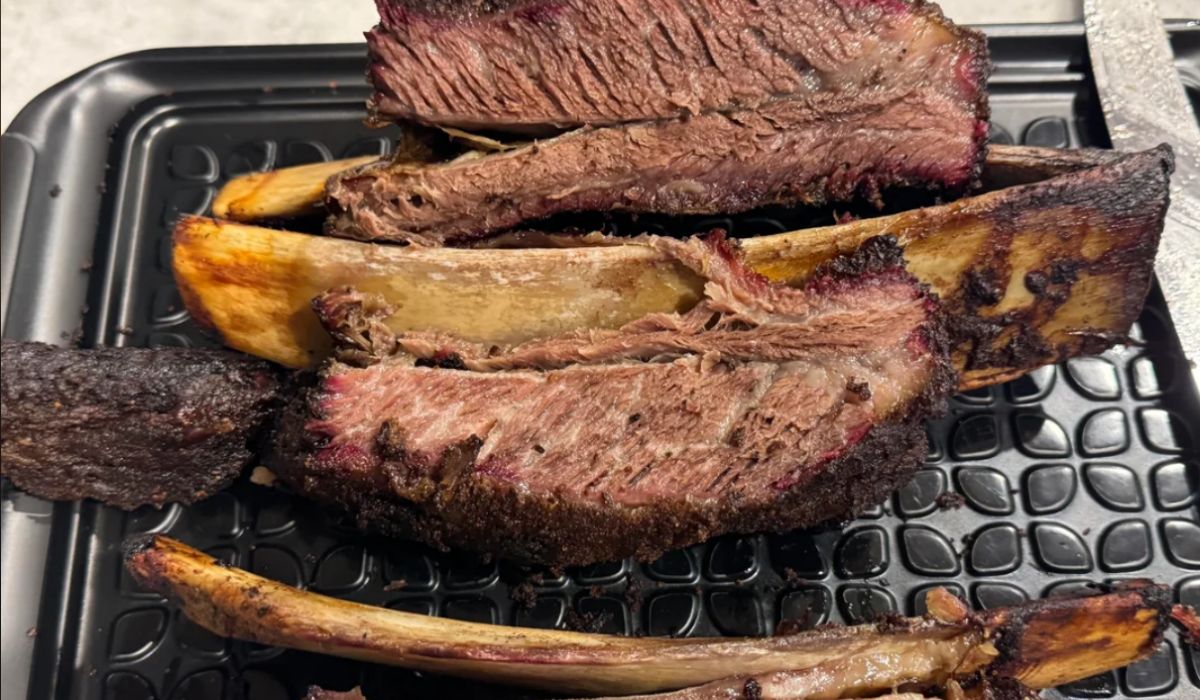
Dino Beef Ribs and the Argentine Costillar: Two Traditions, One Cut
There's a cut of beef that stops people mid-conversation when it hits the table. The "Dino Rib", a massive, bone-in plate short rib, earns its nickname honestly. It looks prehistoric. It demands at...
Leer más
Dejar un comentario
Este sitio está protegido por hCaptcha y se aplican la Política de privacidad de hCaptcha y los Términos del servicio.