


Patagonian Lamb on the Iron Cross: The Ultimate Open-Fire Challenge
In a region where nature is experienced in all its power, the food becomes an embodiment of the land itself. Patagonian lamb, grilled on an iron cross, is a masterpiece of South American cuisine: bold, pure flavors, and a grilling technique designed to face the region’s harsh conditions and relentless winds.
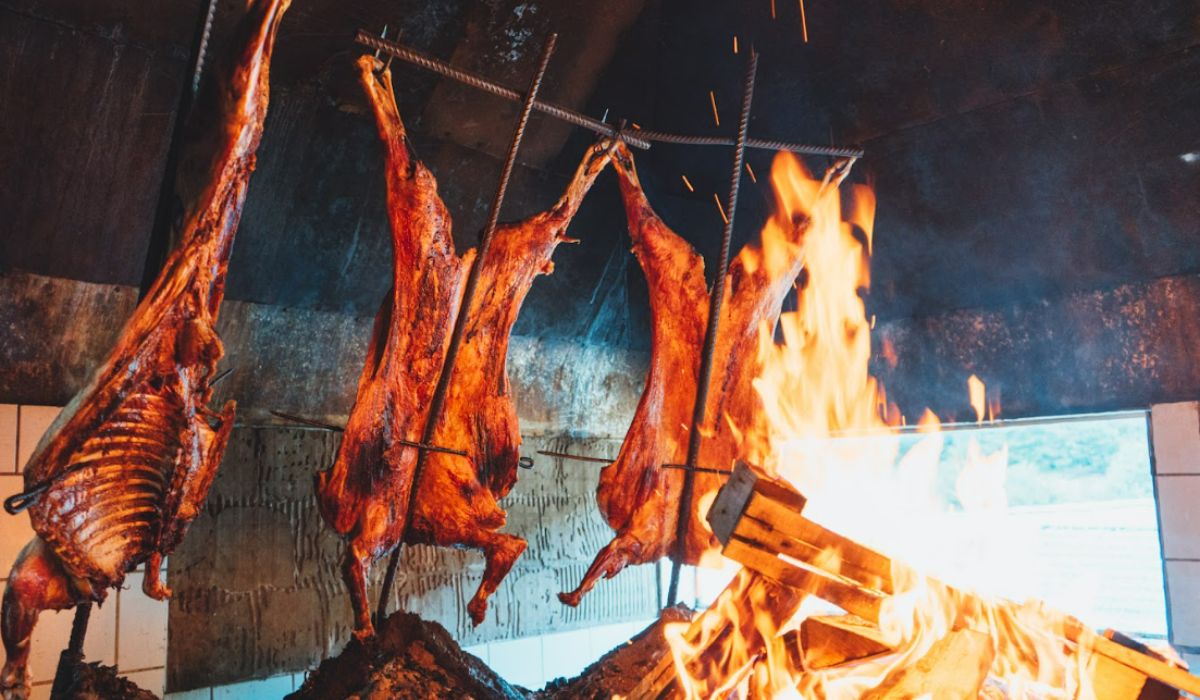
Cordero al asador is when a whole lamb is splayed on a BBQ cross grill and roasted slowly, before a wall of fire. As the flame dances towards and away from the meat, the exterior of the lamb bronzes and tightens, while its interior slowly turns impossibly tender.
Nowadays, what began as a pragmatic response to the fierce Patagonian winds has evolved into the ultimate symbol of communal celebration. Cordero al asador is enjoyed throughout the country, in day-long family and friends gatherings, honoring both friendship and great food over the fire.
In this lamb-roasting guide, we’ll walk you through the physics and the ritual behind the Asador Argentino. We’ll discuss live-fire cooking traditions, heat management, and seasoning methods that make Patagonian lamb on the cross a culinary milestone.
Ready to fire up your grill?
The Heritage of the Steppes: Why Patagonian Lamb?
Southern Patagonia holds some of the most breathtaking landscapes in Argentina: from dramatic mountains to endless windswept plains. Here, lamb is not a seasonal indulgence. It is the king of meats.
The vast, wind-beaten plains of Santa Cruz Province and Tierra del Fuego are the land of ovine estancias, where flocks thrive in a landscape too harsh for intensive agriculture. Here, sheep are sustenance, currency, and identity: the edible heritage of the southern frontier.
Patagonian lambs are raised on open pastures. They develop fine-grained muscle, a mineral-forward flavor profile, and clean-rendering fat that brings subtle sweetness to the meat. When grilled, minimal seasoning is required, something that delights Argentine asado purists, and even those accustomed to the heavier, lanolin-forward notes of grain-finished mutton.
Now, to successfully cook a lamb on a cross, age and weight are key. The ideal animal is young, typically under 25 pounds dressed weight. At this stage, connective tissue remains minimal, and muscle fibers are delicate, ensuring tenderness throughout the long exposure to radiant heat.
Equally essential is the butchery. Cordero al asador is split in an “open-book” style: backbone exposed, carcass flattened and wired to the cross. This is not aesthetic: it is thermodynamics. A broad, even surface regulates heat distribution, rendering fat gradually, and cooking the meat in a controlled way.

Pro tip N° 1 → Looking for the perfect appetizer for your Patagonian lamb? Learn how to cook grilled provoleta cheese, Argentine-style.
Engineering the Cook: The Physics of the Iron Cross
While cordero al asador can be cooked on a flat gaucho grill, the traditional Patagonian technique is using an Argentinian iron cross grill. Here, the animal is tied upright on a cross, before a live fire. Unlike traditional Argentine grills, where heat is transferred by conduction, cooking relies on radiant heat and vertical thermodynamics.
The Asador (Iron Cross) Mechanism
To learn how to cook cordero al asador, it’s crucial to understand the anatomy of an Argentinian iron cross. This cooking method was designed to overcome specific environmental challenges while handling large cuts. This is why every one of its components serves a precise purpose.
Iron crosses, such as the Gaucho Life asador cross, are engineered for grilling whole animals or large primal sections. Their structure consists of a central vertical spine and two pairs of arms, where you secure the lamb by its extremities (hindquarters up to ensure it cooks evenly). The arms are often adjustable, allowing the asador to accommodate animals of varying sizes.
To stabilize the frame against wind and uneven terrain, the vertical spine is anchored to a wide base. It often comes with a 360-degree rotation mechanism. This allows the asador to flip the lamb without unmounting it, ensuring even cooking and complete control throughout the process.
Angulation and Wind Management
When cooking on an iron cross, you don’t have the shelter most grilling stations provide. Because of the cross’s size, it typically has to be set up fully outdoors. A fire pit built with refractory bricks concentrates and directs the heat more effectively, but cordero al asador requires a specific technique.
The ideal setup follows a leeward strategy. After building the fire, the iron cross is set at a 60–70 degree angle. This position shields the lamb from direct gusts while the fire burns on the windward side. The result is a steady wall of radiant heat that cooks the animal evenly and minimizes flare-ups.
Although this live-fire cooking tradition originated in the windswept plains of Patagonia, it remains the ideal approach regardless of wind intensity. The 60–70 degree angle is key to achieving balanced radiant heat exposure, promoting gradual moisture loss and steady fat rendering, giving the meat time to cook all the way through.
To keep the setup stable and prevent it from tipping, it’s essential to use sturdy grilling equipment with a solid base. At Gaucho Life, our asador cross grills feature a heavy-duty base that provides the stability needed to handle strong winds and the weight of a full carcass. They also allow the asador to adjust the spine angle or rotate the lamb, keeping full control over heat exposure throughout the cook.

Pro tip N° 2 → Want to go deeper? Explore the science, history, and technique behind Argentine cross-style BBQ with our dedicated guide.
The Fire Ritual: Building the Wall of Heat
The cordero al asador technique begins with building the fire. Unlike most Argentine grills, the cross requires a vertical flame, not just a bed of coals. With a “wall” of fire, the heat will be projected laterally, toward the lamb, instead of upward.
It’s important to use high-density hardwood logs that burn slowly, producing a consistent, long-lasting flame. In central and northern Argentina, quebracho is the traditional wood for asado, but this tree is scarce in Patagonia. Instead, lamb is typically roasted over piquillín, ñire, and lenga logs, and calafate branches are used as tinder.
U.S. woods that perform equally well for Patagonian lamb on the cross include:
-
Oak logs, which deliver steady, controlled heat ideal for the initial, hours-long roasting with the bone side facing the fire.
-
Mesquite, for finishing the lamb with a stronger sear. Because it burns hotter than oak, it’s excellent for triggering the Maillard reaction.
-
Juniper or mesquite twigs, which work well as tinder for starting the fire.
That said, a proper wall of fire needs a solid ground base. As mentioned earlier, a shallow fire pit helps focus heat radiation toward the cross. Refractory bricks are also a valuable addition, not only for safety, but because they retain heat, increasing radiation and stabilizing the temperature of the flames.
Pro tip N° 3 → Cordero al asador usually takes between 4 and 6 hours. If you try to rush it by moving the cross too close to the flame, you’ll char the exterior, leaving the joints tough and undercooked.
Flavor and Hydration: The Role of Salmuera
When cooking cordero al asador, the go-to seasoning method is salmuera. Why not a dry rub or a wet brine? Because the flames may occasionally lick the meat, burning the spices and herbs stuck to it.
Patagonian lamb has a sweet, mineral flavor that doesn’t need much seasoning to shine. The salmuera used for cordero al asador contains only a few ingredients, designed to enhance, without masking, the natural flavor of the lamb.
Typically, per pound of meat, use:
-
Warm water (½ cup)
-
Coarse salt (½–¾ tsp)
-
Rosemary, chopped (¼ tsp)
-
Garlic, slightly crushed (¼ clove)
Preparing salmuera is simple. Just mix the ingredients in a small pot over low heat until the salt dissolves, then let the mixture rest. Rewarm it before applying, to prevent it from lowering the meat’s temperature when applied.
To baste the meat, transfer the brine to a glass spray bottle. You can also seal the bottle with a cork that has been slightly trimmed at the base to allow the liquid to drip slowly, or use a sprig of rosemary as a brush.
Unlike traditional asado, when roasting a whole lamb on an iron cross, you do not salt the meat before placing it on the grill. Instead, salmuera is used directly. Baste the lamb every 45 minutes to keep the meat hydrated and build a salty, herbaceous crust.
By doing this, you hydrate the surface, protecting it from long exposure to radiant heat. This prevents moisture loss, creates a herbaceous crust, and enhances the lamb’s perceived flavor. The interior remains succulent while the exterior develops a deeply savory finish worthy of the cross.

Pro tip N° 4 → To know when the lamb is ready, check the ribs. When the meat begins to retract from the bones and the thin rib bones turn white, rotate the lamb meat-side toward the fire, and reduce the cross angle for a quick sear.
FAQs
Still curious about how to cook a Patagonian Lamb on an iron-cross grill? Here are the answers to some of the most common questions we hear. If yours isn’t listed, feel free to reach out. We’re always happy to help!
How much wood do I need for a 5-hour lamb cook?
For a 5-hour lamb cook (20–25 lbs dressed weight), plan on roughly 25–35 lbs of dense hardwood. This covers both the initial wall of fire and the steady supply of embers you’ll use throughout the cook. Quebracho wood is the standard for Argentine-style grilling. However, in the U.S., oak or hickory logs are excellent substitutes.
Can I use a standard backyard fire pit with the Gaucho Life Iron Cross?
Yes. A standard backyard fire pit works well with a Gaucho Life BBQ cross grill. For best results, use a shallow pit lined with refractory bricks or heat-reflective stone. This helps concentrate radiant heat, improving the overall heat management.
Do I need to marinate the lamb overnight?
Like most Argentine grilled meat cuts, cordero al asador relies on the natural flavor and tenderness of the animal rather than marinades. The lamb is basted with salmuera: a mixture of warm water, coarse salt, and herbs that enhances the lamb’s natural flavor and keeps the meat moist during the long cook.
What is the ideal weight for a lamb intended for the cross?
To cook Patagonian lamb on the cross, choose a small, young animal. The optimal weight is 18–25 lbs dressed. At this size, the meat remains tender while still being large enough to withstand the long exposure to radiant heat.
Larger lambs require longer grilling times and a different approach. The adjustable height-grates of Santa Maria grills can help you achieve ideal tenderness and flavor, without burning or drying out the meat.
How do I secure the lamb so it doesn't slip during rotation?
To secure the lamb to your Argentinian iron cross grill, anchor the shoulders, ribs, and hind legs tightly to the cross’s arms using stainless steel wires. Make sure to anchor the hindquarters up for even cooking. The carcass should be fully stretched and firmly fixed in place to prevent slippage during rotation.
Mastering the King of the Patagonian Cross
Some dishes don’t just reflect a country’s culture, but its landscape as well. Cooking lamb on the cross is a tribute to the spirit of Patagonia, an homage to a technique that turns a harsh, unforgiving landscape into a source of flavor and tenderness.
Cooking on the cross turns nature, fire, and patience into a rewarding challenge. This process lets you engage with the meat in a more intentional, hands-on way, helping you refine your skills as an asador while deepening your understanding of live-fire cooking.
But at Gaucho Life, we know that mastering cordero al asador requires more than technique. To conquer the king of the Patagonian iron cross, you need the right tools.
Explore our catalog of handcrafted BBQ iron crosses, Argentinian grills, and accessories, carefully designed to bring the authentic Argentine asado experience to your backyard.
Because it’s more than just grilling. It’s a lifestyle.

Read more
Steak Doneness: The Science of the Argentine Asado
In the U.S., steak mastery is measured in degrees. Thermometers define the grilling mindset, turning doneness into an internal target. In Argentina, the philosophy shifts. Steak doneness levels are...
Leer más
Picanha vs. Tri-Tip:The battle for the sirloin
Picanha and tri-tip live next door to each other on the sirloin primal, but on the grill, they could not be more different. One is the crown jewel of Brazilian churrasco and Argentine open-fire coo...
Leer más
Dejar un comentario
Este sitio está protegido por hCaptcha y se aplican la Política de privacidad de hCaptcha y los Términos del servicio.