


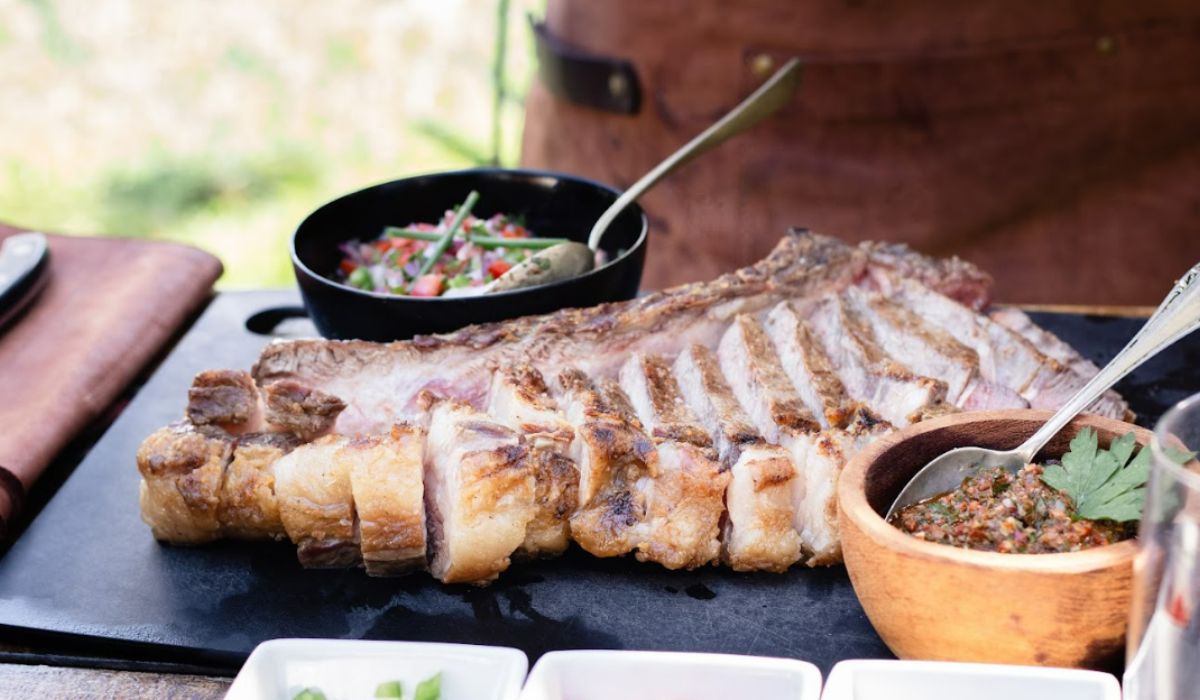
Steak Doneness: The Science of the Argentine Asado
In the U.S., steak mastery is measured in degrees. Thermometers define the grilling mindset, turning doneness into an internal target. In Argentina, the philosophy shifts. Steak doneness levels aren’t something a thermometer dictates: they are a matter of communal taste.
Grilling equipment has been engineered to reflect these traditions. American grills are built for high-heat searing and long smoking sessions, often with controls to manage temperature down to the degree. Argentinian grills rely on their design, using elevation systems and V-shaped grill grates to deliver precision through physics and technique
In this guide, we’ll explore the doneness levels of Argentinian asado vs. American BBQ. You’ll learn the ideal internal temperature for steak cuts and how to leverage your grill’s design to hit them with the confidence of an authentic asador.
Ready to fire up your grill?
The Thermal Spectrum: US vs. Argentine Benchmarks
In the U.S., beef doneness is quantified by degrees. Steak doneness levels are widespread benchmarks that help offer consistent results, reflecting measurable changes in moisture retention, protein structure, and fat behavior.
The Big 5 levels, used in restaurants and most beef recipes, include:
-
Rare (120–125°F). The steak will show a dark red center, which may be cool, almost raw. Texture is extremely soft, as the grain will have barely tightened. Intramuscular fat remains mostly intact.
-
Medium Rare (130–140°F). The core appears red, but is warm. Ideal for cuts with high marbling: most of the internal fat will render and distribute through the muscle, enhancing flavor and juiciness. In other words, it’s the gold standard for marbling liquefaction.
-
Medium (140–150°F). The center is pink, fading toward light rose. While the steak remains tender, it is firmer than when rare or medium-rare, as proteins will contract more noticeably, pushing out the juices.
-
Medium Well (150–160°F). The steak has a faint pink core and a dense texture, as collagen will have tightened, and most of the marbling will be rendered out. Bromatological risk is out of the question, as will be any significant juiciness
-
Well Done (160°F+). You’ll see little to no pink when you slice the steak. Internal moisture will be reduced to a minimum, and texture may feel chewy, depending on the cut. Flavor depends more on the external crust and seasoning than on the internal fat.
Understanding these benchmarks gives you control over beef doneness. All that you need is a reliable meat thermometer to gauge the internal temperature of your steak.
The Argentine Terminology
In Argentina, doneness is mostly sensory, based on how the meat looks when sliced, how it yields under pressure, how the juices run, and your table companions’ taste. Doneness benchmarks also depend on the beef cut and the grilling method, but we’ll get to that later.
Now, these are the key terms you need to know when you dine in an Argentinian steakhouse or if one of your friends is an Argentine asador:
-
Vuelta y vuelta (‘turn and turn’). This is the closest equivalent to rare. The steak is seared just enough to mark the exterior, while the interior remains red and slightly cool. It’s typically reserved for tender cuts with minimal marbling, such as bife de lomo (beef tenderloin).
-
Jugoso (‘juicy’). Comparable to medium rare, jugoso delivers tender texture and juiciness, with a warm center that removes any perception of rawness. This is the sweet spot for cuts like entraña (skirt steak), where the goal is a well-developed crust and a juicy interior.
-
A punto (medium). The default setting at many steakhouses. Depending on the asador, it can lean towards medium or medium-well. The steak features a warm pink center and a firmer bite. Internal fat melts completely, delivering unmatched flavor and peak juiciness.
-
Cocido (well done). Ideal for fatty, bone-in cuts like asado de tira (short ribs). This doneness level allows collagen and connective tissue to break down for deep flavor and tenderness. For lean steaks, cocido doesn’t necessarily mean dry or overcooked, but simply cooked through.

Pro Tip N°1 → Remember to always pull the meat before it reaches the target temperature. Thick steaks can rise by as much as 5°F to 10°F during the resting phase due to carryover cooking.
Heat Control & Mechanical Mastery
Most U.S. grills cook through convection and radiation. Close the lid, increase airflow, and you create an oven-like environment where hot air circulates around the food, while flames or burners radiate heat upward.
A gaucho grill works differently. With an open frame and wide V-shaped grill grates, cooking relies primarily on radiant heat and conduction through the grates. Instead of trapping airflow, heat is controlled by building the coal bed or, in an Argentine-Santa Maria grill, by adjusting grate height: it’s all about mechanical mastery.
Here’s how each feature works in practice, and how to leverage it to achieve the ideal doneness level when grilling a beef steak.

The Crank-Adjustable System
A staple of both Argentinian and Santa Maria grills, height-adjustable grates allow the cook to manage heat intensity without touching the coals. The height-adjustment system acts as a thermal dial, allowing you to raise or lower the entire cooking surface.
How to use the adjustable grates of a Santa Maria grill to hit perfect doneness? Simple:
-
Start with an aggressive sear to promote crust formation and enhance flavor. Position the grate 2–4 inches above the embers and preheat it before placing the steak. This will trigger the Maillard reaction, building a beautiful crust.
-
Once the exterior is developed, elevate the grate to 10–15 inches. This moderates radiant energy while maintaining steady heat exposure. This:
-
Allows thick steaks and bone-in cuts to climb gradually toward their internal target without over-darkening the crust.
-
Helps you reach the desired level of doneness without risk of overcooking or drying out the meat, with thinner cuts.
Here, distance becomes your primary tool, allowing you to move from high-heat searing to controlled finishing by simply moving a crank.
Pro tip N° 2 → Use the "Hand Test" to gauge heat: if you can hold your hand over the grate for only 2-3 seconds, you are at searing temp; 6-8 seconds is ideal for slow-roasting a Vacío or thick Bife de Chorizo.
V-Grate Engineering and Doneness
The V-shaped grates of an Argentine grill aren’t just a design signature: they’re a critical part of how the grill manages heat.
On flat grates, dripping fat falls directly onto the embers, triggering flare-ups and producing acrid smoke that can coat the steak with bitterness. V-shaped grates channel those drippings away from the fire, stabilizing combustion and preserving clean, consistent heat.
Their angled design increases direct surface contact with the grate, strengthening conductive heat transfer. The result? A uniform sear, without sacrificing internal juiciness, something especially important when targeting a medium-rare Argentine bife.
Remember to look for cast-iron grates. Unlike 304 stainless steel, this material requires constant maintenance, but it is worth it.
Cast-iron’s higher thermal mass allows the grate to store and release energy steadily. This reduces temperature drop when cold meat hits the surface, helping you achieve the Maillard reaction and a perfect sear.
Pro tip N° 3 → Want to upgrade your grilling station? Learn how to choose the setup that better suits your lifestyle with our guide on the best Santa Maria grills.
Thermal Targets by Argentine Cut
In Argentina, doneness is dictated as much by the steak type as by preference. Each cut requires a specific approach to collagen breakdown, fat rendering, and moisture retention to deliver the right balance of flavor and texture. Here’s what you need to know to approach an Argentine parrilla with the confidence of a true asador:
Entraña (Skirt Steak) - High-Heat Sprint
Entraña is a staple at every asado. This is a thin cut with pronounced grain structure. The fibers are long and relatively tight, so the goal is to lock in juices before the muscle fibers contract too tightly. In other words, cooking must be fast to preserve the juiciness.
High heat for just a few minutes per side promotes the Maillard reaction, creating a crisp crust while keeping the interior warm, tender, and red. The ideal doneness for an Argentine-style entraña is jugoso or medium rare. If left too long on the fire, the muscle structure will tighten, pushing out the juices and toughening the cut.
Ojo de Bife (Ribeye) - The Balanced Sear
What defines an ojo de bife (ribeye) steak is its marbling. That’s why the ideal doneness for this cut is a punto (medium). At this stage, the fat properly liquefies, enriching the meat’s texture while preserving juiciness and delivering a warm, structured bite.
The real challenge is fully rendering that intramuscular fat without overcooking the meat or scorching the exterior. The most effective method begins with a strong initial sear over high heat to develop crust. Then, elevate the grate and cook over moderate heat for approximately 5–6 minutes per side, depending on thickness.
Gaucho Life’s height-adjustable grills make this transition seamless: simply turn the crank to reduce radiant intensity and guide the steak toward its perfect finish.
Tira de Asado (Short Ribs) - Collagen Transformation
When grilling Argentine tira de asado (short ribs), bien cocido (well done) is not a compromise with bromatology, but the goal. Short ribs contain dense connective tissue that needs prolonged thermal exposure to break down.
Over 90–120 minutes of low, steady heat, collagen will gradually convert collagen and tissue into gelatin, creating the tender, succulent texture that’s a staple in every Argentine steakhouse. The result is meat that can be easily separated from the bone, rich with flavor, and deeply satisfying in texture.

Pro tip N° 4 → Ready to expand your steak repertoire? Explore the full range of Argentine beef types and their U.S. equivalents with our guide.
An Alchemy of Embers
The right technique and the right grill can only take you so far when it comes to achieving the perfect level of doneness. The real foundation? A well-managed bed of embers and a pinch of coarse salt.
Argentine asado is rooted in charcoal grilling. The goal isn’t to char a crust aggressively, but to build it gradually over steady heat, developing deep surface flavor while preserving internal moisture. Achieving that balance requires clean combustion and thermal consistency, both of which come from glowing embers, not active flames.
On Argentine grills, heat stability depends on fire management rather than burner control. That’s why an iron brasero is a defining feature of traditional Argentinian setups.
By maintaining a separate space to burn wood or charcoal down into embers, you create a continuous, controlled fuel source. Fresh embers can be added beneath the grate as needed, without disrupting your cooking rhythm or sacrificing valuable grill space.
Salt also plays a structural role in determining the doneness of Argentinian beef cuts. When applied before or during grilling, coarse sal parrillera forms a protective layer that helps retain internal moisture during longer cooks, enhances tenderness, and promotes the Maillard reaction. How does this happen? Well:
-
After salting, the large crystals draw a small amount of surface moisture to the exterior. That moisture dissolves the salt and is gradually reabsorbed into the meat.
-
As it penetrates the muscle, the salt begins to denature proteins, gently loosening muscle fibers and improving perceived tenderness.
-
Meanwhile, the surface dries. This reduced surface moisture, combined with intensified protein and sugar interactions under heat, creates the ideal conditions for the Maillard reaction.
Pro tip N° 5 → To help large cuts retain their juiciness during hours-long grilling sessions, Argentine asadores baste them with salmuera, a mixture of warm water, coarse salt, and herbs. Learn more in our guide to wet brine vs. dry rub vs. salmuera.
FAQs
Still curious about steak doneness levels in Argentina and in the United States? Here are the answers to some of the most common questions we hear. If yours isn’t listed, feel free to reach out. We’re always happy to help!
Why do Argentines prefer their steaks cooked more than Americans?
In Argentina, many cuts are cooked slightly longer because traditional asado cooking prioritizes gradual fat rendering and texture over strict temperature targets. Many staples of Argentine asado are bone-in cuts, rich in connective tissue, and require long grilling sessions to achieve a balanced, flavorful bite.
How does the V-grate prevent the bitter taste of grease fires?
V-shaped grates reduce flare-ups and acrid smokes by channeling rendered fat away from the fire, into a drip tray. This keeps combustion cleaner, protecting the steak’s natural flavor.
Does the material of the grill (Iron vs. Stainless Steel) affect heat retention?
Yes. Iron grills have superior thermal mass and heat retention, meaning they maintain stable cooking temperatures even when cold meat is added. Stainless steel is easier to clean and resists corrosion, but typically stores and radiates heat less efficiently than thick iron, which is why traditional Argentine parrillas favor heavy iron construction.
What is the benefit of the Salmuera (basting brine) for moisture retention?
Basting the meat with slamuera helps regulate surface dehydration and replenishes lost moisture. It also helps the crust remain flexible, evenly browned, and with no charred spots.
How long should I let my steak rest before slicing?
Depends on thickness. Thin steaks may need only a 5–10 minute rest to allow the juices to redistribute and prevent them from spilling. Thick cuts can need up to 15 minutes of rest.
Want to understand these underbelly cuts like a grillmaster? Check out our guide on Flank Steak vs. Flap Meat.
Two Worlds, One Fire
Mastering the doneness of Argentine beef cuts is an exercise in patience. It requires unlearning the “hot and fast” U.S. approach in favor of fire control and steady rhythm. Southamerican tradition teaches that doneness is not chased: it is guided, using distance, time, and consistent heat.
Gaucho Life’s height-adjustable Argentine grills bridge these traditions, providing the mechanical precision needed to achieve perfect doneness regardless of technique. Built with durable materials and proven designs, our grills are carefully engineered for peak performance, control, and versatility.
Explore our catalogue of grills and accessories, and start building an outdoor cooking station that grows with your skills. Because at Gaucho Life, we know it is more than just grilling. It’s a lifestyle.

Read more
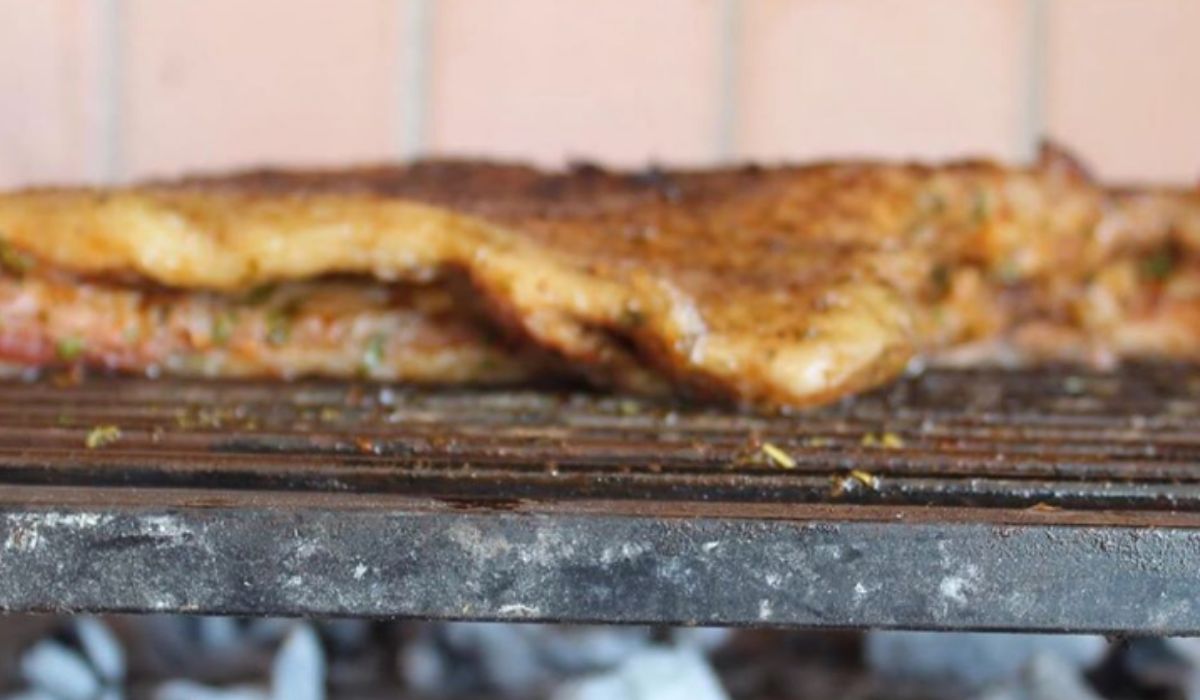
Flank Steak vs. Flap Meat: The Underbelly of the Argentinian Asado
The U.S. grilling landscape is a roadmap of flavors and techniques. Lately, it has broadened southbound, embracing new charcoal-fueled traditions, from Mexican carne asada to Argentine asado. Grill...
Leer más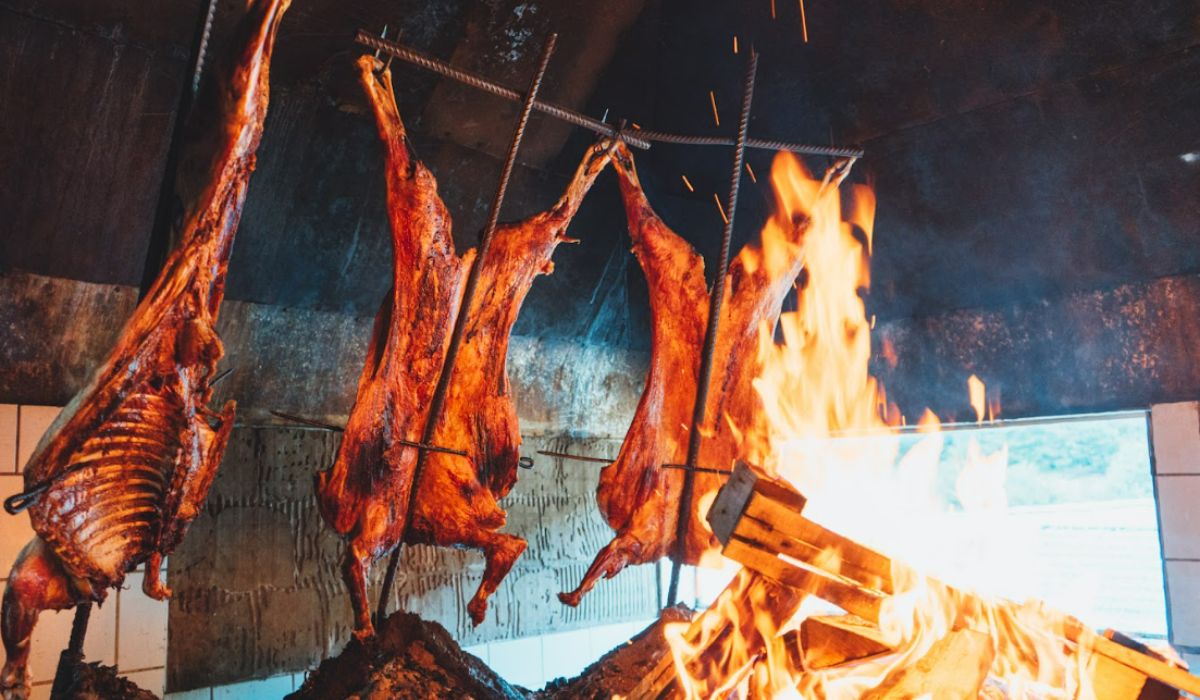
Patagonian Lamb on the Iron Cross: The Ultimate Open-Fire Challenge
In a region where nature is experienced in all its power, the food becomes an embodiment of the land itself. Patagonian lamb, grilled on an iron cross, is a masterpiece of South American cuisine: b...
Leer más
Dejar un comentario
Este sitio está protegido por hCaptcha y se aplican la Política de privacidad de hCaptcha y los Términos del servicio.