

%20for%20dinner%20is%20a%20big%20deal%20in%20any%20beef-loving%20culture.%20There%E2%80%99s%20a%20reason%20it%E2%80%99s%20known%20as%20the%20king%20of%20steaks.%20Its%20decadent%20texture%20and%20delicate%20flavor%20win%20ov...)

How to Grill Ribeye Steak (Ojo de Bife) the Argentine Way
Having ribeye steak (Argentinian ojo de bife) for dinner is a big deal in any beef-loving culture. There’s a reason it’s known as the king of steaks. Its decadent texture and delicate flavor win over any crowd, whether you cook it on the grill or on a hot griddle.
In this article, we’ll look at how to grill ribeye steak Argentinian-style: over a charcoal fire, with just a pinch of salt. So roll up your sleeves, fire up the grill, and get ready to enjoy ribeye steak in a whole new way.
What Cut Is Ojo de Bife?
Ojo de bife is Argentina’s take on the ribeye. The name literally means “eye of beef.” It’s a boneless cut from the rib primal, easily recognized by its round shape, dark-red color, generous marbling, and the kind of price tag that can make your heart skip a beat.
The whole cut comes in a long, tube-shaped roll that can weigh anywhere from 3 to 6 pounds, depending on the size of the steer. It’s usually sold as thick medallions, roughly 2 inches wide, with a small fat cap running along one edge.
In Argentina, grilled ojo de bife steaks are usually saved for special occasions. Most of the time, it’s cooked on a plancha over the stove. You can also throw the whole piece onto a gaucho grill fueled with hardwood logs or charcoal to give it a smoky touch that highlights its rich, beefy flavor.
But it’s not the flavor alone, but its texture that puts this cut in a league of its own. Thanks to all its marbling, an ojo de bife steak practically melts in your mouth. Just keep in mind that its high-fat content means you’ve got to watch for flare-ups when grilling over open fire.

Pro Tip N° 1 → Keep leveling up your grilling game! At Gaucho Life, we got you covered on how to grill New York Strip Steak (bife de chorizo) Argentinian-style.
Two Grilling Philosophies: Asado vs. Sear
There are many ways to cook a ribeye steak on the grill, each one reflecting a philosophy rooted in age-old fire-cooking traditions.
Argentinian asado, for instance, is part of a social ritual born centuries ago, when gauchos roamed the pampas, traveling from ranch to ranch in search of work. It is a celebration, an excuse to gather with your loved ones, share a glass of wine, and chat around the grill while the meat cooks slowly over glowing charcoal embers.
In an asado, typically a whole ojo de bife is grilled low and slow, giving the meat time to soak up that smoky flavor only a charcoal grill can offer. When it’s sliced into steaks, for smaller gatherings, it cooks faster, but not so fast that the internal fat doesn’t have time to melt and infuse every bite with flavor.
To achieve that perfect balance, many Argentinians use the reverse-sear method. They start the ribeye over gentle heat, and once it’s close to the desired doneness (usually medium-rare) they add more embers for a quick final sear. This helps prevent flare-ups and lets you hit the exact finish you want without overcooking or undercooking the meat.
On the other hand, American-style ribeye grilling starts hot, with a hard sear right off the bat, followed by a finish over indirect heat. This creates a crisp, flavorful crust (especially if a flare-up or two jumps in), while keeping the inside tender and juicy.
This approach reflects the role grilling plays in many U.S. households. More than a celebration, it’s a way of life, one where ribeye steak stands as the undisputed king of the grill.
In Argentina, while ojo de bife is certainly prized, an asado brings a whole lineup of beef cuts that truly shine over an open grill, delivering unique flavors and textures you simply can’t compare.

Pro Tip N° 2 → New to charcoal? Check out our 101 beginner’s guide to charcoal grills.
How to Grill Ribeye Steak Step by Step: The Asado Way
At Gaucho Life, we know there are few things as satisfying as the smell, flavor, and sight of a perfectly grilled ribeye steak. Everyone deserves to enjoy a cut like this every now and then. So let’s walk step by step through how to cook a ribeye steak, Argentinian-style.
-
Choosing a great cut of beef is the first step toward an unforgettable meal. Pick a boneless, thick-cut ribeye with visible marbling and a deep-red color.
-
Let the meat rest at room temperature for 30-40 minutes before grilling. This helps build a beautiful sear and keeps the steak from turning tough. Don’t trim the fat cap! Let it add its touch of flavor.
-
While the meat comes up to temp, get your grill ready. Use an Argentine iron brazier to produce steady embers from hardwood logs or charcoal. Rake the coals under the grill with a poker.
-
Allow the grates to preheat to medium heat (about 350°F). To gauge the heat the traditional way, hold your hand 3 inches above the grates. You should last about 7-8 seconds.
-
Season the ribeye with a pinch of kosher or coarse salt 10 minutes before grilling.
-
Place your ojo de bife on the grill. If you’re using a Santa Maria setup, raise the grates to prevent flare-ups and keep the temperature steady.
-
When juices start to pool on the surface, flip the steak.
-
Cook until the internal temperature hits 120-125°F. For a 2-inch steak, this usually takes about 5-6 minutes per side.
-
For reverse searing, rake more embers under the grill and give it an additional 1-2 minutes per side. On a Santa Maria Argentine grill, simply lower the grates.
-
For medium-rare, pull the steak at 125-130°F. Let the carryover heat finish the cook: it can add another 5-10°F after you take it off the grill.
Want to cook a whole ribeye on a charcoal grill? Preheat it to 250–300°F (about a 10-second hand test). Cook the whole piece for 30-40 minutes on the fat-cap side, then flip and cook for another 30 minutes.
Pro Tip N° 3 → Wondering if the whole cut will be enough for your crowd? Here’s our guide on how to calculate meat for an asado.
The Ribeye’s Drama (and how to solve it): Fat and Flare-Ups
Cooking a great ojo de bife comes with its own set of tricks. The most important is choosing the right piece of meat. The second, although just as crucial, is preventing flare-ups.
Marbled cuts like ribeye can be challenging to grill because of the fat drips. When those drippings hit the embers, they can ignite and scorch your steak or leave it tasting bitter from the smoke.
The solution lies in the equipment. V-shaped grill grates are designed to catch and channel the fat away, preventing those drops from hitting the fire. Santa Maria grills are also great for this: if a flare-up kicks up, instead of scrambling to move the meat and hoping the flame dies down, you simply raise the grate.
At Gaucho Life, we know a good ribeye is worth its weight in gold. That’s why our grills have the best of both worlds: the adjustable grates of a Santa Maria and the V-shaped grates of classic Argentinian grills. That makes them ideal for quickly searing, as well as for cooking thick cuts low and slow for hours. No more hockey-puck steaks: just fire-kissed, juicy results.
Pro Tip N° 4 → For cuts that require indirect cooking, you can prevent flare-ups by arranging the embers in a ring along the edges of the grill. In the center of the circle, place a layer of ash without any live coals. The ash will absorb the fat drippings and keep flames from flaring up.
Serving and Slicing the Ojo de Bife
Once your ribeye is cooked, let it rest for 5-10 minutes before slicing. This gives the juices time to redistribute so they don’t spill out the moment you cut into it.
Slice against the grain for a more tender bite. If you cooked a whole ojo de bife, cut it into 2-inch-thick rounds and have your guests slice their portions against the grain.
Because it’s a rich, fatty cut, ojo de bife pairs beautifully with the bright acidity of chimichurri. This sauce is a staple at every Argentine asado. Made with fresh herbs, spices, vinegar, and olive oil, it’s the perfect companion for ribeye.
Other ideal pairings include provolone cheese (grilled in an Argentine “provoletera”), crusty homemade bread, an arugula and cheese salad, BBQ grilled vegetables, and of course, a generous pour of bold Malbec.
Pro Tip N° 5 → Treat yourself to a wooden serving board and a set of gaucho knives. Bring the ribeye to the table and serve it like a true asador.
FAQs
Still curious about how to grill ribeye steak on a charcoal grill? Here are answers to some of the most common questions we hear. If yours isn’t listed, feel free to reach out. We’re always happy to help.
What is ojo de bife in English?
Ribeye is the U.S. equivalent of the Argentinian ojo de bife. This cut comes from the rib primal. It has a circular shape, a deep-red color, and thick marbling that gives it a tender texture and a decadent, beefy flavor.
How long should I grill a ribeye?
It depends on the thickness and your desired doneness. A 2-inch ribeye is usually grilled for about 6 minutes per side over medium heat (around 350°F) to reach medium-rare. For accurate results, it’s always best to use a meat thermometer.
What’s the best method for grilling ribeye?
One of the best ways to grill a ribeye steak is the reverse-sear method on a charcoal grill. Cook it over medium-low heat until the internal temperature reaches 120-125°F. Then, rearrange the embers under the grates to raise the heat and sear for 1-2 minutes per side.
If you’re using a Santa Maria grill, simply raise or lower the grate to manage temperature.
How do I avoid flare-ups?
To avoid flare-ups when grilling ribeye, the right equipment makes all the difference. Argentinian grills have V-shaped grates that channel fat away, preventing grease from dripping onto the fire. On a Santa Maria grill, you can simply lift the grate to keep the flames from charring your meat.
Can I cook ribeye on a gas grill?
Yes, you can cook ribeye on a gas grill. But if you enjoy smoky flavor, charcoal or wood will deliver better results. The best approach is to set up two heat zones for reverse searing
A Grill that Fits the King of Steaks
Ribeye is a cut that never fails to deliver. Its rich marbling brings incredible flavor and tenderness by default, but to make it truly shine, it has to be grilled just right.
That’s where the Argentine way comes in: slow, steady embers, a clean reverse sear, and V-shaped grates that keep fire and fat working in your favor. Master that balance, and every steak becomes an experience worth sharing.
Ready to find a grill worthy of an ojo de bife? Explore our catalogue of handcrafted argentine barbecue and accessories, each built to help you find the best gaucho grills for your lifestyle… and the perfect throne for the king of steaks.
Because, at Gaucho Life, we know it’s more than just grilling. It’s a lifestyle.

Read more
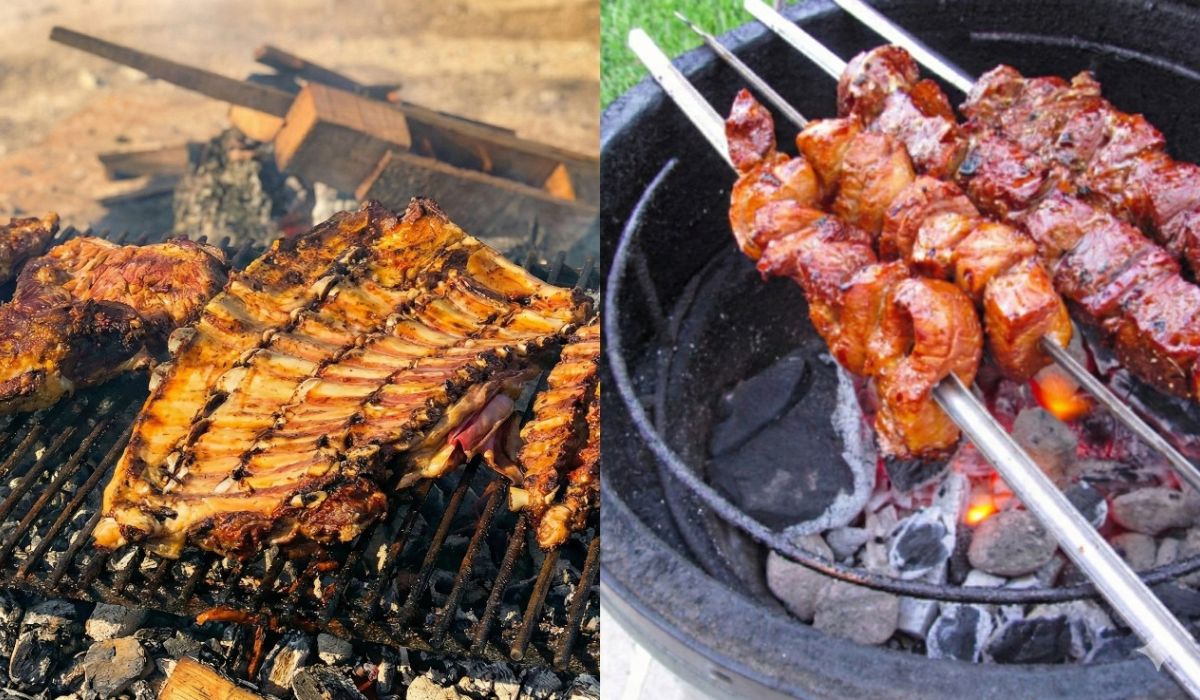
Brazilian Churrasco vs Argentine Asado: Two Grilling Traditions, One Fire
The rivalry between Brazil and Argentina goes far beyond soccer. Argentine asado and Brazilian churrasco represent two distinct, and equally beloved, approaches to the ritual of firewood cooking. I...
Read more
How to Grill Short Ribs - Asado de Tira (Argentine Style)
An Argentine asado wouldn’t be complete without a great plate of short ribs. Asado de tira, or costillar as it’s known in Argentina, is a somewhat fibrous cut, but one that’s absolutely packed with...
Read more
Leave a comment
This site is protected by hCaptcha and the hCaptcha Privacy Policy and Terms of Service apply.