


Brazilian Churrasco vs Argentine Asado: Two Grilling Traditions, One Fire
The rivalry between Brazil and Argentina goes far beyond soccer. Argentine asado and Brazilian churrasco represent two distinct, and equally beloved, approaches to the ritual of firewood cooking.
In this article, we’ll break down the similarities and differences between churrasco and asado. We’ll explore meat cuts, cooking techniques, fire setups, and serving traditions that define each style, giving you a window into the world of South American BBQ.
So pour yourself a mate cup, grab a bag of charcoal, and fire up your grill. Your journey into the gaucho way of life starts now.
The Philosophy of the Fire: Asador vs Churrasqueiro
They say the soul of a people lives in its food, and at Gaucho Life, we believe it’s true: Asado and churrasco are proof of it. Behind each of these grilling methods lies an entire culinary and social philosophy, one that reflects the spirit of each country.
Both churrasco and asado trace their roots back to the colonial era of South America, when missionaries, soldiers, and gauchos traveled endlessly across the land. Still, each tradition developed its own unique approach:
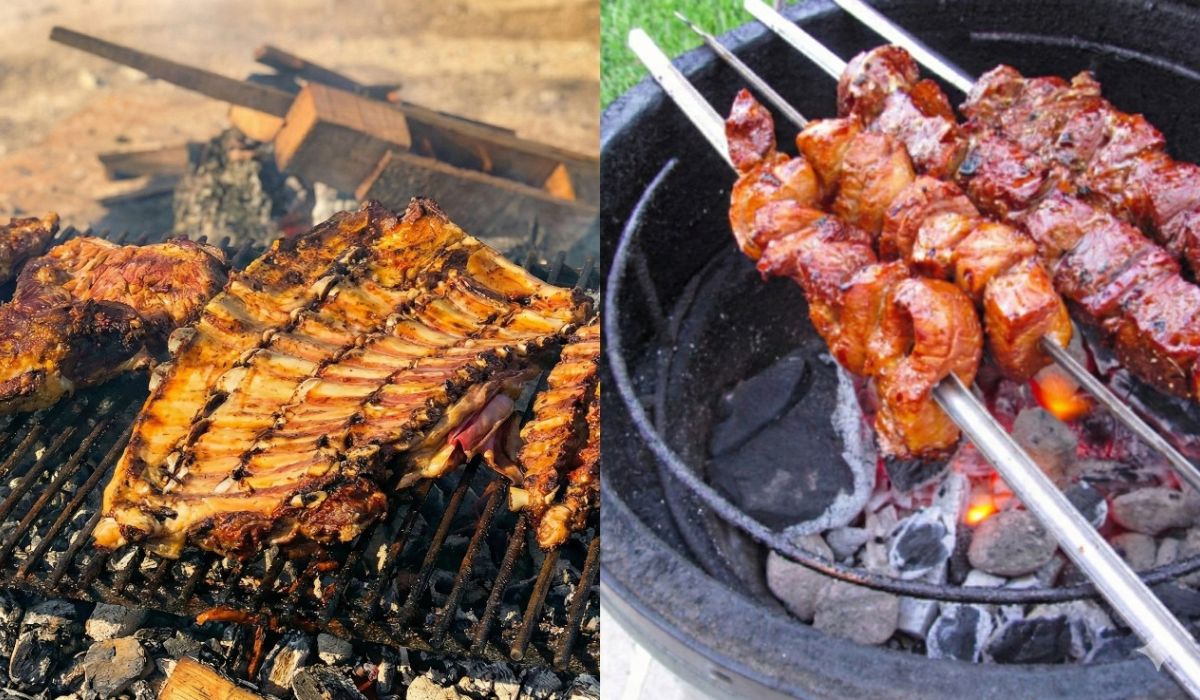
In an asado, the meat is cooked on open-frame grills over charcoal or hardwood embers, and it’s only flipped once. Large, thick cuts are grilled slowly so the connective tissue has time to melt, which makes steady ember production in an Argentine brasero, and good fire management, absolutely essential.
An Argentine asado unfolds cut by cut. Each piece moves from the grill, the asador’s kingdom, straight to the table. However, at a Brazilian churrascaria, the churrasqueiro brings a small charcoal grill oven to the table, where the meat is cooked and carved for guests all at once.
In Brazilian churrasco, the meat is cooked over high heat on long skewers that are constantly turned for even roasting. There’s no need to wait until an entire cut is fully cooked before slicing; instead, guests enjoy their preferred doneness as the meat is carved directly from the skewer.
Pro Tip N° 1 → Keep exploring grilling styles. Discover the differences between Texas and Santa Maria barbecue.
Meat Cuts: Simplicity vs Variety
Another key difference between churrasco and asado is the variety of cuts used. Argentinians have a set of classic beef cuts for asado, many featuring fine marbling and generous fat caps that make them perfect for long, slow grilling and minimal seasoning.
Typical cuts include vacio (flank steak), entraña (skirt steak), short ribs, ojo de bife (ribeye), and chorizo sausages. Though other cuts, like offals, bife de chorizo (New York Strip steak), or matambre, sometimes make an appearance, the overall list tends to be narrower than what you’ll find in a Brazilian churrasco.
In churrasco, the cuts are usually served in abundance and already sliced, rodízio-style. Thick cuts are the norm, chosen because they can be carved into thin, juicy slices. They don’t always have the fine, intricate marbling found in Argentine selections, but they do feature a substantial fat cap that’s intentionally left on to add flavor and moisture as it melts over high heat.
Some of the classics include picanha (rump cap), fraldinha (flank), and linguiça (sausage). Offals are less common than in Argentine grilling, except for chicken hearts: a staple in Brazil but seldom eaten in Argentina.
| Category | Argentine Asado | Brazilian Churrasco |
|---|---|---|
| Typical cuts | Vacío (flank steak), skirt steak, short ribs, ribeye, chorizo and morcilla sausages, offals, and colita de cuadril (tri-tip) | Picanha, alcatra (top sirloin), fraldinha (flank), costela (beef ribs), linguiça, chicken hearts, maminha (tri-tip) |
| Fat content | Combines high-fat and leaner cuts | Cuts often have thick fat caps |
| Cooking style | Slow cooking over low embers (parrilla), allowing gradual rendering and subtle smoke | High-heat grilling on skewers (espetos) or grate, producing a more pronounced char and faster fat melting |
| Seasoning philosophy | Mostly, only salt. Flavor comes from meat quality and fat rendering | Salt-focused, with occasional seasoning or marinades |
| Offals | Very common. Molleja (sweetbreads), chinchulín, and kidneys are delicacies | Chicken hearts are the main offal |
Pro tip N° 2→ Some cuts make an appearance in both Brazilian BBQ and Argentine grilling. Learn how to grill picanha, Argentine-style.
Fire and Grill Setup: Parrilla vs Skewers
While both churrasco and asado rely on wood fire, each tradition uses its own distinctive cooking gear, which reflects the preferred cooking style and the cuts that shine brightest in each country.
A typical Argentine setup usually includes an Argentine parrilla with a brasero on the side to produce a steady supply of glowing embers. This keeps the main grill clean and gives the asador far more control over heat management.
Most Argentine grills also feature V-shaped grates, ideal for highly marbled cuts like tira de asado (short ribs) or vacio. As the fat melts, the V-grates channel the drippings away from the fire, preventing flare-ups. In some designs, the grates are adjustable, similar to a Santa Maria grill. Raising or lowering them makes temperature control intuitive and precise.
Brazilian churrasco, on the other hand, leans heavily on vertical or horizontal skewers. These are set over white-hot embers, sometimes on a gaucho-style grill, sometimes on a compact charcoal, and sometimes directly mounted on the wall.
Because the meat is typically cut into smaller pieces and pierced through the skewers, cooking churrasco demands constant attention and rotation to prevent burning. Many setups include a rotisserie system to ensure even turning.
Pro Tip N° 3 → Looking for a charcoal grill that fits your style? Explore the pros and cons of Santa Maria vs Gaucho grills.
Cooking Techniques: Low-and-Slow vs High-and-Constant
When it comes to cooking techniques, churrasco and asado begin on opposite ends of the spectrum. Even though both rely on charcoal or hardwood logs, asado uses low, steady heat to cook whole cuts of meat. Some cuts, like entraña (skirt steak), are grilled quickly over high heat, but even then, direct flame is avoided. Charred bark isn’t something an Argentine asador strives for.
Brazilian churrasco, on the contrary, is cooked over strong, radiant heat. The meat isn’t spread out across a grate like in an Argentine asado. Instead, it’s threaded in a zig-zag pattern or in large chunks onto heavy iron skewers. To keep the meat juicy and prevent it from burning, the skewers are rotated constantly.
In a way, these grilling styles reflect the rhythm of each culture. In Argentina, asado is both a gathering and a moment of quiet devotion, a chance for the asador to spend time alone, in communion with fire and meat. Brazilian churrasco, on the other hand, feels like a carnival. There are many cuts, all moving back and forth from the grill. Everything is in motion: the skewers, the guests, even the grills themselves when meat is cooked right at the table.
As for marinades and rubs, both churrasco and asado place the spotlight squarely on the meat. South American beef is among the best in the world, and many grillmasters prefer seasonings that enhance its natural flavor rather than mask it.
Most cuts are simply seasoned with coarse salt and nothing more. Brazilian and Argentine steak marinades tend to be light-handed: just a bit of pepper, herbs, and garlic to create a rustic, natural flavor profile.
Pro Tip N° 4 → Dive deeper into South American food culture. Learn how to cure a mate gourd from scratch.

Flare-Up Control: The Argentine Advantage
Brazilian churrasco can be cooked on horizontal skewers mounted along a fire wall or on open-frame grills set over a bed of charcoal embers.
Because most churrasco cuts are cooked with the fat cap left on, avoiding flare-ups becomes a real challenge. It calls for constant movement and careful attention, maybe not exactly what you had in mind for a laid-back Sunday cookout.
This is where Argentine grills step in.
Even though the rivalry between Argentina and Brazil has been alive for centuries, both countries are always ready to lend each other a hand. V-shaped grill grates, the signature feature of Argentine grills, solve the classic churrasco dilemma.
Designed to channel fat drippings away from the fire, these grates help prevent the bitter smoke and burnt crusts that flare-ups can create. While they do require a bit more effort to clean, they’re ideal for grill masters who want a crispy crust without bitter char.
Add adjustable grate height into the equation, and you have an Argentine Santa Maria grill. Versatile and finely engineered, this setup supports a wide range of cooking techniques, from fast, high-heat searing to slow, hour-long grilling and even smoking.

Pro tip N° 5→ Take your outdoor kitchen to the next level. Find the best Santa Maria grill for your setup.
Serving Style and Ritual
Once the meat is ready, slicing it and bringing it to the table is the privilege of the churrasqueiro or the asador. Still, the serving ritual unfolds a little differently depending on the style of BBQ.
In an Argentine asado, guests wait at the table while the asador makes the rounds. Cuts are served one by one, carried on wooden carving boards. After the first round is complete, tradition calls for guests to shout ¡Un aplauso para el asador! (‘cheers to the asador’) followed by a hearty round of applause.
A Brazilian churrasco, meanwhile, is an endless parade of meat. The churrasqueiro moves back and forth from the grill, slicing pieces directly from the skewers and serving them rodízio-style, according to each guest’s preference.
And what about the sides? In Argentina, asado is typically paired with fresh green salads, BBQ grilled vegetables, and, of course, chimichurri, the spicy, tangy sauce that shows up at every Sunday barbecue.
Brazilians also lean into local flavors such as cassava-based farofa and pão de queijo. Churrasco is also often served with vinagrete, Brazil’s answer to Argentina’s salsa criolla: a bright, tangy mixture of chopped onion, tomato, and bell pepper.
Pro Tip N° 6→ Why not take the best of both worlds? Pair the simplicity of an Argentine-style grilled ribeye (ojo de bife) with Brazilian sides for a hybrid grill night.
FAQs
Still curious about the difference between asado and churrasco? Here are answers to some of the most common questions we hear. If yours isn’t listed, feel free to reach out. We’re always happy to help!
What’s the main difference between churrasco and asado?
The main difference lies in their cooking methods. In an asado, whole cuts of meat are grilled slowly over glowing embers. For churrasco, the meat is threaded onto long skewers and cooked quickly over high heat or open flame, with constant rotation to prevent charring.
Is picanha part of the Argentine asado?
Picanha isn’t typically part of an Argentine asado, but a staple of Brazilian churrasco. Argentine grills tend to favor cuts like tira de asado (short ribs) and vacio, both of which are cooked low and slow over embers.
Want to dive deeper into sirloin cuts? Don’t miss our full guide on Tri-Tip vs Picanha.
Can I do both on the same grill?
You can cook asado and churrasco on the same grill simply by placing the skewers over the grates. Look for grills with adjustable height and V-shaped grates (like our Argentine grills) to manage temperature more effectively and avoid flare-ups.
What’s better for fat control?
To control grease drips and reduce flare-ups, V-shaped grill grates are your best ally: they channel fat away from the fire. On a Santa Maria grill, you can also adjust the grate height to keep charring at bay.

Two Traditions, One Unbeatable Tie
Argentinian asado and Brazilian churrasco are pillars of their cultures: two traditions that honor fire, flavor, and community, that bring something unique to the table. Here, the ancient rivalry has no winner. It’s a tie.
With the right grill setup, you don’t have to choose between the patience and poetry of asado or the festive rhythm of churrasco. You can experience both slow-cooked asado and high-heat rodizio, right in your own backyard.
Explore our handcrafted Argentine grills and accessories, engineered to celebrate the full spirit of South American cooking with precision and style.
Explore our collection of handcrafted Argentine grills and accessories carefully engineered to celebrate the full spirit of South American cooking with precision and style.
Because at Gaucho Life, we know it is more than just grilling. It's a lifestyle

Read more
How to Grill Skirt Steak & Entraña: the Argentine Way
Some cuts don’t have the allure of a NY strip steak or the show-stopping look of ribs on BBQ cross grills… And yet, they still manage to leave a lasting mark on your palate. Argentine entraña, or s...
Read more
How to Grill Ribeye Steak (Ojo de Bife) the Argentine Way
Having ribeye steak (Argentinian ojo de bife) for dinner is a big deal in any beef-loving culture. There’s a reason it’s known as the king of steaks. Its decadent texture and delicate flavor win ov...
Read more
Leave a comment
This site is protected by hCaptcha and the hCaptcha Privacy Policy and Terms of Service apply.