


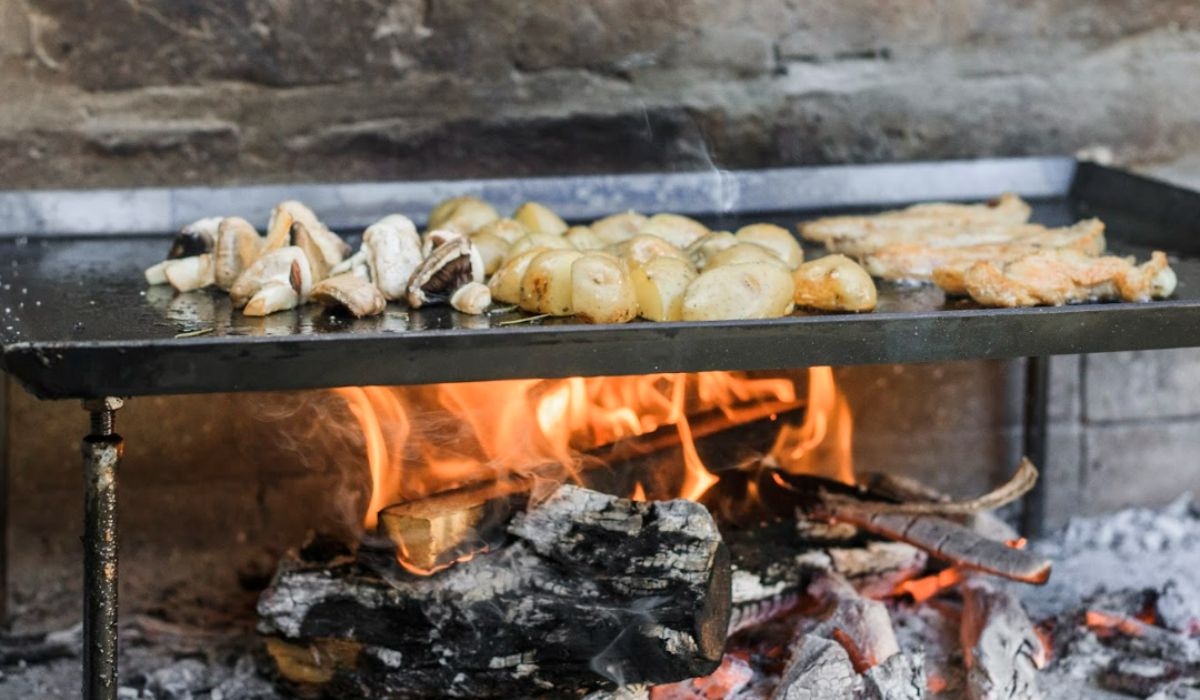
Griddle vs. Grill: Mastering Argentine Asado Thermodynamics
The choice between an argentine griddle and a gaucho grill is rarely as simple as it looks. At its core, it's a question of thermodynamics: how heat moves, how it interacts with protein and fat, and what kind of crust you're trying to build. In the Argentine tradition, the plancha (griddle) and the parrilla (grill) were never conceived as competing tools. They're two instruments in the same system, each designed to extract a different dimension of flavor from the same fire.
Where North American grilling culture tends to prioritize convenience (quick heat, preset temperatures, repeatable results), the Argentine asado operates on a different logic entirely. The asador manages energy. He pre-burns wood in the brasero, controls ember depth, adjusts grate height, and reads the fire before a single cut of meat touches the surface. Precision over the fire is what makes the difference between a good steak and one people talk about the next morning.
Thermodynamics of Fire: Conduction vs. Radiation
Every cooking surface transfers energy to food through one of two dominant mechanisms: conduction or radiation. Knowing which one applies, and when, is the foundation of serious asado technique.
The Griddle and the Power of Conduction
The plancha works through direct physical contact. When a cold piece of meat is placed on a hot surface, energy moves from the metal into the protein through conduction, driving the surface temperature high enough to trigger the Maillard reaction, the cascade of chemical reactions between amino acids and reducing sugars that produces the crust, color, and depth of flavor associated with a properly seared steak.
The critical variable here is thermal mass. A thin or low-quality griddle loses temperature the moment cold meat hits it, dropping below the Maillard threshold (around 280°F) and producing steam rather than a crust. That's why a heavy-duty carbon steel plancha, ideally ¼ inch thick, functions as a thermal battery: it absorbs and holds enough energy to maintain surface temperature throughout the cook, delivering an edge-to-edge, uniform crust without cold spots.
Our carbon steel griddles are built for exactly this purpose, handcrafted in Argentina from high-grade iron with superior heat retention across the entire cooking surface.

The Grill and the Nuance of Radiation
The parrilla operates differently. Rather than direct contact, it transfers energy through infrared radiation emitted by glowing wood embers. These waves penetrate the outer layer of the meat and heat it progressively from the surface inward, which is why grill-cooked cuts can develop a deep, even internal temperature while the exterior chars only gradually.
The physics here matter. Radiant heat follows the inverse square law: double the distance between the heat source and the meat, and the energy received drops to one quarter. This is precisely why an adjustable-height crank system gives the asador something a fixed grate never can: the ability to render fat slowly without scorching the exterior. On our Santa Maria grills, that height adjustment is built into the design, giving you the same level of control over radiant intensity that a traditional Argentine asador achieves by moving embers by hand.
Engineering the Perfect Crust: The Maillard Horizon
The Maillard reaction doesn't begin until the surface of the meat reaches approximately 280–330°F, but it only produces the results you're after when the surface stays dry. Surface moisture acts as a ceiling: water boils at 212°F, and as long as moisture is evaporating, the surface temperature cannot climb above that point. The result is steaming, not searing.
Pro Tip N°1 → Pat your steak completely dry before it touches either the plancha or the parrilla. Salt draws moisture to the surface. If you season well in advance, dry the exterior again just before cooking.
The V-Grate Innovation
Standard round-rod grates make contact at a single point along the meat's underside. Argentine V-shaped grates provide a wider, angled contact surface, which does two things simultaneously: it increases the area exposed to direct radiant heat, producing a more expansive Maillard reaction across the surface; and it channels fat and juices away from the embers and toward a collection tray, preventing flare-ups.
There's a secondary effect worth understanding. As juices pool in the V-channel and vaporize against the hot metal near the meat, they create what functions as a self-basting microenvironment. The rising vapor condenses onto the underside of the cut, deepening the savory profile without requiring any intervention from the cook. It's a passive system that improves flavor automatically.
Our Santa Maria grills with V-shaped grates combine this design with an adjustable elevation mechanism, giving you control over both the radiant heat intensity and the self-basting dynamics.
Griddle vs. Grill: The Crust War
The plancha wins on speed and uniformity. For a thin cut like entraña (skirt steak), the goal is maximum conductive contact and near-instant Maillard activity across the entire surface. A V-grate does not have enough contact area to match that.
For a thick ojo de bife (ribeye), the calculation reverses. High intramuscular fat content means that aggressive conductive heat would cook the surface to well-done before the interior reaches the target temperature. The parrilla's radiant, graduated heat allows the fat to render progressively, melting into the muscle fibers rather than burning off at the surface.
The most effective approach combines both: sear on the plancha to build the crust, then finish on the parrilla at elevated height to bring the interior to temperature without overcooking the exterior. This is the hybrid setup we build around with our gaucho grills, and it's what separates a modular Argentine system from a standard backyard grill.

Technical Mapping: Finding the Best Surface for the Cut
For a broader overview of the cuts you'll encounter at any Argentine asado, our guide to the best Argentine grilled meat cuts covers anatomy, flavor profiles, and typical grilling times.
Bife de Chorizo (NY Strip)
The bife de chorizo has a thick external fat cap that requires careful management. Placed directly on high conductive heat, that fat cap renders unevenly and tends to cause flare-ups. The V-grate parrilla is the right surface here: radiant heat works through the fat cap slowly from the outside in, basting the lean muscle throughout the cook without charring the exterior. Raise the grate during the initial cook, then lower it for the final sear.
For a detailed breakdown of technique, check out our guide on how to grill bife de chorizo the Argentine way.
Entraña (Skirt Steak)
Entraña is thin, fibrous, and high in intramuscular fat. It cooks fast, and it needs to. The longer it spends on heat, the tougher the fibers become. The carbon steel plancha is the right surface: full contact across the entire cut, instant Maillard activity, and enough thermal mass to finish the cook in two to three minutes per side without a temperature drop. No gaps, no cold zones, no steaming.
To go deeper on this cut, our guide on how to grill entraña the Argentine way covers technique, resting, and slicing in full detail.
Ojo de Bife (Ribeye)
The ribeye's high intramuscular fat makes it forgiving on time but demanding on heat management. Start on the V-grate parrilla at medium height to allow radiant heat to work through the fat gradually. Once the internal temperature approaches your target, lower the grate for a finishing sear. This reverse-sear approach preserves marbling instead of rendering it out, and we cover it in depth in our ribeye grilling guide.
Mollejas (Sweetbreads)
Sweetbreads are mostly collagen, and they require a two-phase approach. Begin on the parrilla: radiant heat firms the exterior while the interior collagen starts to break down. Then transfer to the plancha for a final blast of conductive heat that crisps the surface to the crackled, caramelized finish that makes mollejas worth the effort. Each surface handles one part of the job; neither handles both.
Specialized Argentine Techniques: Beyond the Standard Grate
Not every Argentine cut belongs on a flat surface or a V-grate. Two traditional tools address cooking scenarios that conventional equipment simply cannot handle.
The Disco de Arado (Plow Disk Cooker)
Originally fashioned from agricultural plow discs, the disco de arado is the Argentine equivalent of a high-heat wok: concave, heavy, and designed to hold liquids at the center while the outer rim functions as a dry sear zone. It's the right vessel for discada (a mixed meat stew), and it handles braising in a way that neither a flat plancha nor a V-grate can replicate. Fat and juices stay in contact with the meat throughout the cook, building concentrated flavor through reduction. The same principle applies to any preparation where the liquid is part of the result.
The Infiernillo (Little Hell)
The infiernillo is a vertical dual-heat system: food is placed between two fire trays, one above and one below, creating a radiant environment that surrounds the cut from both directions. The name translates roughly to "little hell," which fits the intensity. Salt-crusted whole fish, full racks of ribs, and whole-animal preparations all benefit from this enclosed radiant chamber. The symmetrical heat eliminates cold spots and produces an even internal cook that no adjustable grate system can replicate for large-format preparations.
Material Science and Safety
The longevity of any asado system depends on the grade of metal used at each point in the structure, and the choices are not interchangeable.
Carbon steel is technically superior to cast iron for planchas for one specific reason: thermal response time. Cast iron holds heat well but is slow to adjust when you add cold ingredients or need to pull back surface temperature quickly. Carbon steel responds faster, giving the asador more real-time control over the cook. With repeated use, carbon steel also develops a natural patina: a polymerized layer of seasoned oil that acts as a non-stick surface and is completely non-toxic, unlike synthetic coatings.
304 stainless steel is the right material for structural components: frames, V-grates, and elevation systems. It resists oxidation in humid outdoor environments and maintains dimensional stability under repeated thermal cycling, meaning grates stay true and frames don't crack. The AISI 316 stainless steel cable used in our Santa Maria elevation systems is the same marine-grade alloy used in coastal construction, chosen specifically for its corrosion resistance.
There's also a health dimension worth knowing. The V-grate geometry guides rendered fat away from the embers and into a collection tray rather than letting it drip onto open flame. When fat hits fire, it produces heterocyclic amines (HCAs) and polycyclic aromatic hydrocarbons (PAHs), compounds that the National Cancer Institute classifies as mutagenic, meaning they cause changes in DNA associated with elevated cancer risk in animal studies and several epidemiological analyses. The V-grate system reduces that exposure structurally, without requiring any change in how you cook.
Pro Tip N°2 → The brasero is the soul of temperature stability. Pre-burn your wood to pure embers away from the meat before introducing them under the grate. Direct flames produce acrid, bitter smoke that works into the meat's exterior. Clean embers deliver fragrance and heat without the chemical byproducts of incomplete combustion.
Frequently Asked Questions
Can I use a carbon steel plancha on my existing Santa Maria grill?
Yes. Our carbon steel planchas fit directly onto Santa Maria grill frames, sitting over the embers the same way the standard V-grate does. The plancha occupies part of the cooking surface while leaving the remainder of the grate available, so you can run both surfaces simultaneously during the same cook.
Why do V-grates produce better flavor than standard round-rod grates?
Round rods make contact at a single point, producing narrow grill marks and leaving most of the underside exposed to open flame without structure. V-grates cover more surface area, promote a more expansive Maillard reaction, and channel fat toward a collection tray rather than letting it drip onto the embers and generate flare-up smoke.
What is the difference in maintenance between carbon steel and 304 stainless steel?
Carbon steel requires active seasoning: oil the surface and heat it after each use to maintain and build the patina. Left wet or unseasoned, it will develop surface rust. 304 stainless steel requires almost no maintenance beyond cleaning. It resists rust without treatment and is designed for outdoor exposure. Carbon steel belongs on cooking surfaces; stainless steel belongs on structural components.
Which Argentine cut is the hardest to cook on a standard flat-top griddle?
The bife de chorizo. Its thick fat cap does not render well under conductive heat alone. The exterior sears before the interior fat has time to break down, leaving a rubbery, undercooked edge. The V-grate parrilla with adjustable height gives the fat cap the gradual radiant exposure it actually needs.
How does the thickness of the steel affect the Maillard reaction?
Directly. Thinner steel loses temperature when cold meat makes contact, dropping below the Maillard threshold and allowing surface moisture to accumulate. A ¼-inch carbon steel plancha retains enough thermal mass to hold cooking temperature throughout the sear, keeping the surface dry and hot: the two conditions a proper crust requires.

The Asador's Toolkit, Unified
The griddle vs. grill debate dissolves the moment you approach it as an asador. The question was never which tool wins. It was always which tool serves this cut, at this moment, over this fire.
Put the entraña on the plancha: it needs speed and full surface contact. Give the bife de chorizo the V-grate: the fat cap demands graduated radiant heat. The ojo de bife rewards patience on both surfaces, in sequence.
We build our Argentinian grills and gaucho griddles around exactly this philosophy: modular, handcrafted tools that let you deploy the right surface for every cut, fueled by wood embers and managed with the patience that great asado demands. Explore our full collection and build the outdoor kitchen that matches the way you cook.

Read more
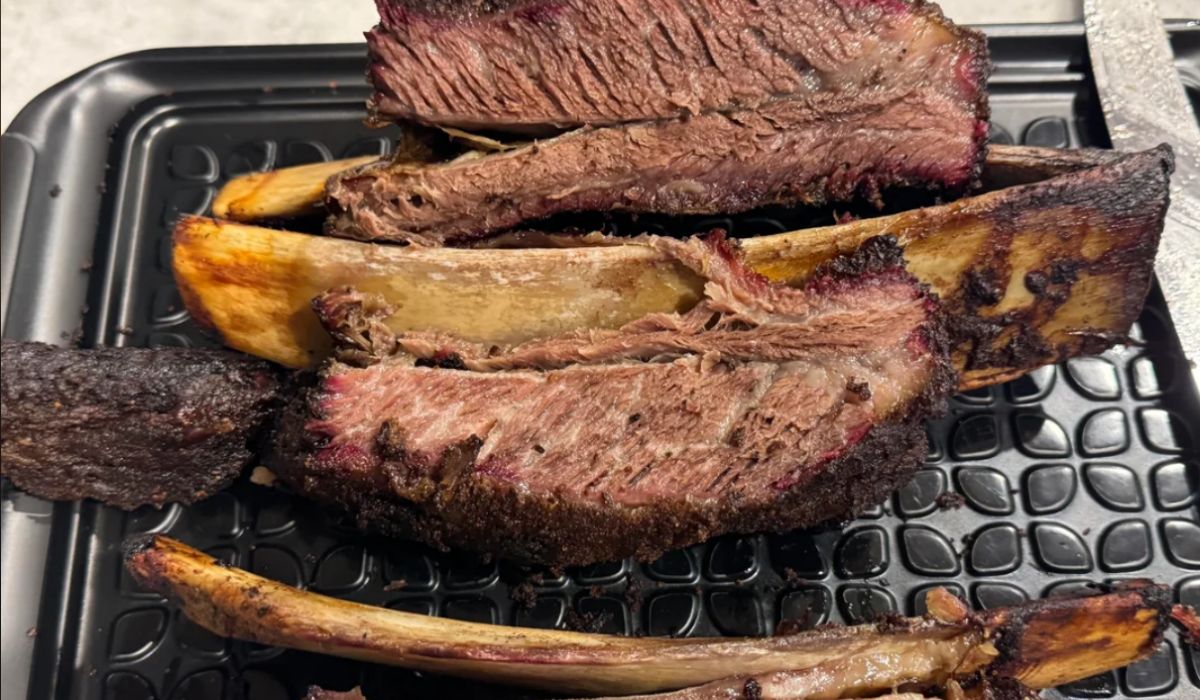
Dino Beef Ribs and the Argentine Costillar: Two Traditions, One Cut
There's a cut of beef that stops people mid-conversation when it hits the table. The "Dino Rib", a massive, bone-in plate short rib, earns its nickname honestly. It looks prehistoric. It demands at...
Read more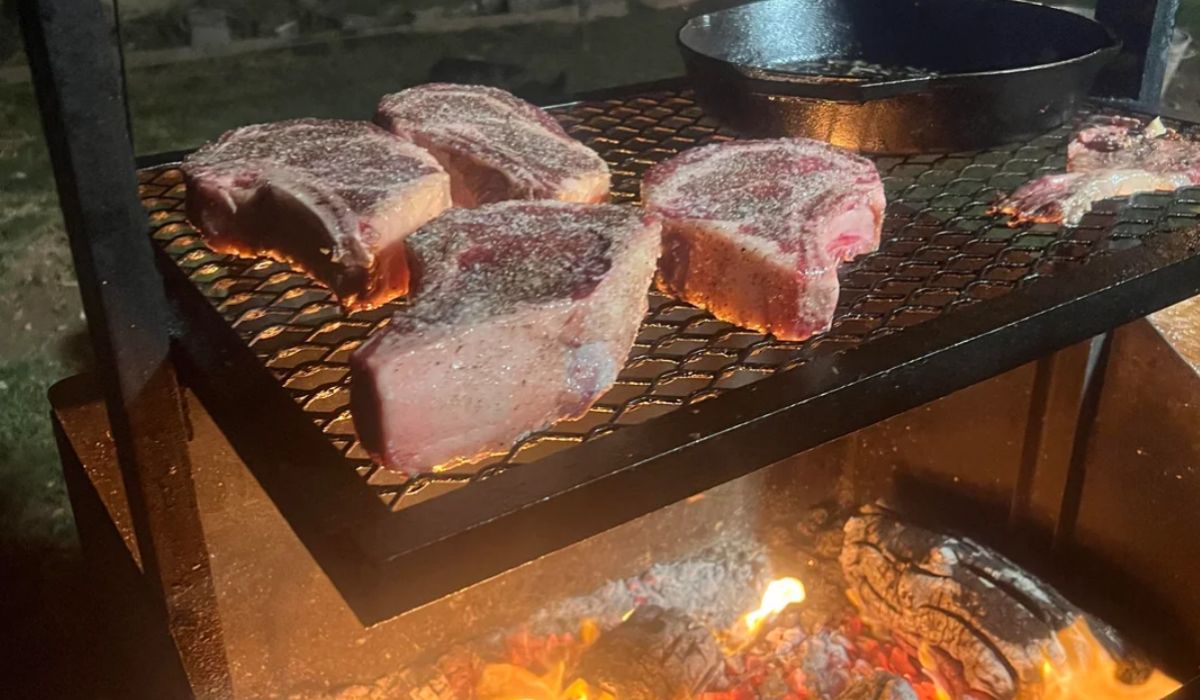
Five fires, five philosophies of grilling
Every grill on the market right now is an argument about how fire should behave. Buy one, and you've picked a side in that argument, whether you meant to or not. Each system is solving the same pro...
Read more
Leave a comment
This site is protected by hCaptcha and the hCaptcha Privacy Policy and Terms of Service apply.