


Dino Beef Ribs and the Argentine Costillar: Two Traditions, One Cut
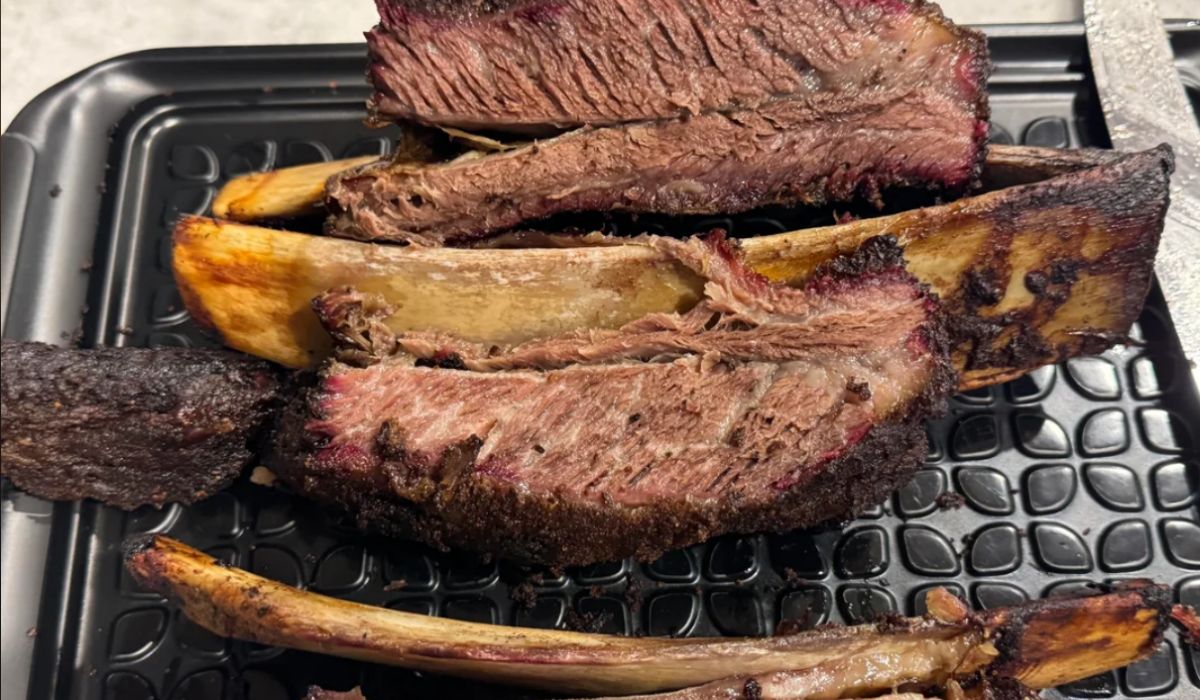
There's a cut of beef that stops people mid-conversation when it hits the table. The "Dino Rib", a massive, bone-in plate short rib, earns its nickname honestly. It looks prehistoric. It demands attention. And cooking it correctly demands even more.
In the Texas smokehouse tradition, this cut is approached as an engineering challenge: smoke penetration, bark development, and a precise window of collagen breakdown. In Argentine barbecue, the equivalent centerpiece is the costillar, a full rack cooked open-air over radiant embers, protected by bone and fat, patient as the asador tending the fire.
Same anatomy, two philosophies. Understanding both is the fastest path to mastering either. If you want a broader look at where each tradition comes from, our Texas vs. Santa Maria barbecue guide is a good place to start.
Anatomical Foundations: Sourcing the "Dino" and the "Costillar"
The beef ribcage is not one undifferentiated slab of meat. Where you cut determines everything. The back ribs, which sit closest to the spine, are largely scraped clean during fabrication. Most of the meat goes with the ribeye, and what's left is beautiful to look at and disappointing to eat. They're not what you're after.
The real opportunity is lower on the animal: the plate, spanning ribs 6, 7, and 8. This section carries dense muscle tissue, heavy intramuscular fat, and a generous fat cap. It runs long, thick, and rich. Cook it right and it rewards you with something genuinely exceptional.

NAMP 123A: The True Plate Short Rib
When ordering from a butcher or a meat supplier, the specification that matters is NAMP 123A, the industry code for the whole, untrimmed plate short rib. This is a three-bone rack with individual ribs that can measure up to 12 inches in length and carry significant meat above the bone. The marbling in this section rivals a well-graded ribeye, and the collagen content is high enough that it requires a long cook to reach its full potential.
Retail "short rib" blocks sold pre-cut are often too small, trimmed too aggressively, or sourced from less ideal sections of the plate. For the Dino experience, that "brisket-on-a-stick" quality that gets photographed at every serious BBQ competition, the NAMP 123A is the only correct starting point.
The Holistic Argentine Costillar
The Argentine asador approaches the rib rack from a different angle entirely. Rather than isolating individual ribs or a single bone section, the traditional costillar is cooked as a complete, unbroken rack, often spanning the full length of the animal's ribcage.
This isn't just tradition for tradition's sake. Keeping the rack whole serves specific technical purposes. The uninterrupted fat cap insulates the meat throughout a multi-hour cook, regulating surface temperature and preventing the outer layer from drying out. The bone itself functions as a thermal shield: dense, slow to heat, and positioned between the fire and the meat during the critical early phase of the cook. The result is a gentle, from-the-inside-out approach to heat delivery that a trimmed, individual rib simply cannot replicate.

The Molecular Transformation: Collagen to Gelatin
Every pitmaster who has cooked ribs long enough has encountered both the ceiling and the floor of this cut. Pull it too early and the meat is tight, fibrous, resistant. Push past the window and it's dry. The science behind that narrow band of perfection comes down to one protein: Type I collagen.
Denaturation and the "Melt-in-Your-Mouth" Texture
Collagen is the connective tissue that binds muscle fibers together. In a hard-working muscle like the plate short rib, it's abundant. At lower cooking temperatures it remains largely intact, and the meat stays tough regardless of how long it's been on the fire.
The transformation is a gradual process. As internal temperature climbs and time accumulates on the fire, collagen fibers begin to denature and convert to gelatin, the compound responsible for that silky, rich mouthfeel that separates an exceptional rib from a merely good one. The catch is that this conversion demands time as much as heat. Rushing the temperature increase by cooking too hot collapses the exterior before the interior has had enough time to complete the process. The result is meat that reads as "done" on a thermometer but still feels chewy and tight when you eat it. Time is as critical as temperature.
Navigating the "Stall"
Anyone who has monitored a long cook with a probe thermometer has seen this: the internal temperature climbs steadily, then flatlines, sometimes for two hours or more. This is the stall, and it's caused by evaporative cooling. The surface of the meat perspires moisture faster than the fire can drive temperature upward, a process thermodynamically identical to what keeps a runner from overheating on a long course.
In the Texas tradition, the standard solution is butcher paper: wrapping the ribs traps the rendered fat and steam, pushing through the stall without the steam-softening effect of foil. Argentine technique offers a different answer. A well-maintained brasero produces steady, consistent radiant heat, and the bone-side orientation, with bones facing the fire, acts as a buffer that allows the cook to hold temperature without dramatic swings. The stall is managed through fire discipline rather than wrapping.
Protocol Comparison: Smoke vs. Radiant Embers
The divergence between Texas smokehouse and Argentine asado is not about which tradition produces superior results. It's about two genuinely different relationships between fire and meat, each with its own internal logic.
The U.S. Smoking Protocol: Engineering the Bark
Texas-style beef ribs are built on a foundation of two ingredients: coarse salt and black pepper. Applied generously and allowed to form a crust before the cook begins, this rub sets the stage for the Maillard reaction, the browning process that occurs when amino acids and reducing sugars interact under heat, producing the complex, roasted flavor compounds that define a great bark.
The smoke source matters considerably. Post Oak is the standard in Central Texas, prized for its clean, medium-intensity smoke profile that complements beef without overwhelming it. Hickory works well but burns hotter and requires more careful management. The goal in either case is "thin blue smoke": the near-invisible combustion that leaves flavor without the acrid bitterness of heavy white smoke.
After 6 to 10 hours at 225°F to 250°F, the ribs enter a rest period that's often underestimated. Carryover cooking continues to push internal temperature upward even after the ribs leave the heat, and wrapping them in butcher paper and resting in a cooler for 45 minutes to an hour allows the muscle fibers to relax and reabsorb their juices. Skip the rest and you'll see those juices pool on the cutting board instead.
The Argentine Asado: A Ritual of Embers
The Argentine approach begins with the brasero: a dedicated combustion chamber, separate from the cooking surface, where wood burns down to white-hot coals before any meat touches the grate. This separation of combustion from cooking is fundamental. It ensures that only clean, radiant energy reaches the meat, with no volatile compounds from active flame and no flare-ups.
Bone-side orientation is the core technique of the costillar. For roughly 80% of the cook, the rack sits bones-to-the-fire. The dense bone conducts heat gradually inward, while the fat cap on the opposite side remains protected, slowly rendering and basting the meat from above. Flipping to fat-side-down comes late in the cook, once the internal structure has relaxed, to develop color and finish the rendering.
Heat management in the Argentine tradition relies on physical distance and instinct rather than digital probes. The "hand test", holding a palm 4 to 6 inches above the grate and counting seconds before discomfort, remains the standard reference: 10 to 15 seconds indicates the medium-low radiant heat ideal for a long costillar cook. The seasoning stays minimal throughout: sal parrillera, a coarse-grained salt applied in stages rather than as a single upfront rub. The goal is to draw out and concentrate the meat's natural flavor, not to layer additional complexity on top of it.
For a deeper look at how Argentine technique differs from American open-fire cooking, our guide to grilling ribs on a Santa Maria covers the setup and pacing in detail.
Technical Synergy: Why Standard Grills Fail
The engineering demands of a long, high-fat cook like the Dino rib or the costillar expose the limitations of conventional backyard equipment quickly. A standard kettle or offset smoker may handle the thermal requirements, but the grease management, height control, and combustion separation that distinguish a great result from a good one require more deliberate design.
-
Grease Management. As the fat cap renders over several hours, the volume of liquid fat falling toward the heat source is substantial. On a flat grate over direct coals, that fat ignites, producing acrid flare-ups, black soot, and a bitter compound called creosote that embeds itself in the bark. Our V-Shaped Grill Grates channel rendered fat along angled rails and away from the fire, routing it into a drip tray rather than onto the coals. What you get is clean, steady radiant heat from start to finish.
-
Dynamic Height Control. A long rib cook benefits from the ability to change the relationship between meat and heat at different stages. Our Santa Maria grills use a wheel-operated elevation system that allows the asador to work at high elevation during the early hours, when gentle, indirect heat drives collagen conversion, and finish with a close-to-the-embers reverse sear that locks in color and develops the crust. That range of motion, in a single cook on a single grill, isn't replicable on fixed-grate equipment.
-
The Brasero Advantage. Separating combustion from the cooking surface eliminates the variables introduced by active, impure combustion: volatile smoke compounds, inconsistent temperatures from flaring wood, and the ongoing management of a fire directly beneath the meat. A dedicated brasero produces clean, calibrated embers that are added to the cooking zone as needed, the same controlled heat source that makes Argentine asados as much a science as they are a ritual. If you're still weighing options between a dedicated smoker and a Santa Maria setup, our smoker vs. grill comparison lays out the tradeoffs honestly.
Pro Tip: When ordering dino ribs from your butcher, ask specifically for NAMP 123A as a "whole, untrimmed plate." Standard supermarket short rib blocks are trimmed too aggressively and lack the meat thickness needed to survive the thermal cycle required to fully convert collagen. If your butcher doesn't recognize the NAMP code, describe what you want: three bones, bone-in, with the full muscle cap intact.
FAQs: Troubleshooting the Rib
Why are my ribs chewy even though they hit 203°F?
Temperature is necessary but not sufficient. Collagen conversion requires both heat and time. If the ribs reached 203°F too quickly, in under 6 hours for instance, the collagen didn't have enough time to fully convert to gelatin. The fix is to slow the cook down. Lower your cooking temperature to 225°F and extend the time, even if the probe reads "done" early.
How do I avoid the bitter taste of creosote on my bark?
Creosote forms when combustion is incomplete: heavy white smoke, active flame touching the meat, or fat igniting directly under the rack. Use thin blue smoke from well-seasoned Post Oak or hickory, keep temperatures stable, and manage airflow carefully. Switching to a V-Grate setup eliminates the fat flare-up issue entirely.
Should I use foil or butcher paper to wrap my dino ribs?
Butcher paper is the preferred option for beef ribs. Foil traps all moisture and steam, which softens the bark and removes the texture contrast that makes a great rib worth eating. Butcher paper is breathable and pushes through the stall while preserving the integrity of the crust. If you're cooking Argentine-style with steady radiant heat and a brasero, wrapping may not be necessary at all.
What's the difference between plate ribs and chuck short ribs?
Plate ribs (NAMP 123A) come from ribs 6, 7, and 8, lower on the ribcage, with thick, uninterrupted muscle over each bone. Chuck short ribs come from ribs 1 through 5, higher on the animal, with more inter-muscular separation and less meat per bone. Both are excellent cuts, but plate ribs are the ones that produce the single-bone, brisket-like result associated with the Dino rib. Our guide to asado de tira goes into the Argentine short rib tradition in depth.
How do I know the collagen has fully transformed without a thermometer?
Probe tenderness is the answer, and it's arguably more reliable than a temperature reading. Insert a thin metal skewer or a leave-in probe into the thickest part of the meat. When the collagen has fully converted to gelatin, the probe slides in with almost no resistance, as if entering warm butter. Any tension or springback means the ribs need more time regardless of what the number says.

The Right Steel Makes the Difference
Getting a great beef rib right takes three things working together: a well-sourced cut, a well-built fire, and equipment that can actually support both. Get the cut wrong and the technique doesn't matter. And without a grill built for this kind of cook, the fire works against you instead of with you.
Standard backyard grills were designed for convenience, not for the precision that a multi-hour, high-fat rib demands. The grease management, height control, and combustion separation built into our parrillas aren't cosmetic features. They're what separates a rib that's merely cooked from one that becomes the centerpiece of a meal people talk about for weeks.
Explore our collection BBQ Cross Grills and argentine grills and bring that level of control to your next cook, whether you're chasing a bark-forward Texas masterpiece or the quiet, confident ritual of an Argentine asado.

Read more

The belt as a cultural signifier: Polo vs Western
A premium leather belt secures a pair of trousers while also expressing lineage, taste, and a particular sense of style. Few accessories communicate that as clearly as the Argentine polo belt and t...
Weiterlesen
Griddle vs. Grill: Mastering Argentine Asado Thermodynamics
The choice between an argentine griddle and a gaucho grill is rarely as simple as it looks. At its core, it's a question of thermodynamics: how heat moves, how it interacts with protein and fat, an...
Weiterlesen
Hinterlasse einen Kommentar
Diese Website ist durch hCaptcha geschützt und es gelten die allgemeinen Geschäftsbedingungen und Datenschutzbestimmungen von hCaptcha.