


V-Grates vs Round Rod Grill Grates: Your Fire Experience, Unlocked
Recently, there has been a renewed desire for primal, authentic experiences. Open-fire and charcoal grilling have resurfaced as the ultimate way to turn cooking into, rather than a means of survival, a lifestyle.
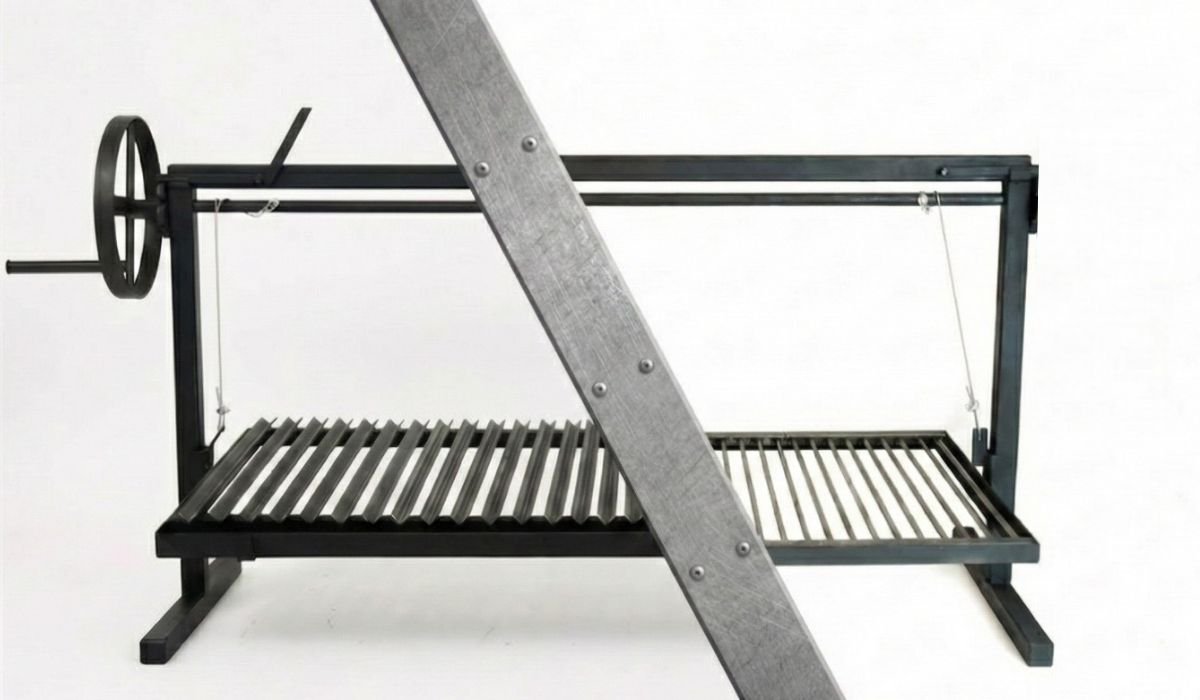
Grill grates play a central role in shaping both how you cook and what ends up on the plate. Two of the most widely available grate styles are V-channel grates and round rod grill grates. Round rod grates are the standard across the U.S. market and are also used on some gaucho grills, while V-shaped grates are commonly found in Santa Maria and Argentinian grills.
In this article, we’ll break down both grate styles, exploring the different cooking philosophies, materials, and designs, and how each one influences flavor, fire control, and safety.
Ready to dive into open-fire grilling? Let’s discover why the V-grates vs. round rod debate isn’t about aesthetics, but flavor, fire, and health.
Thermal Physics 101: How Grates Actually Cook
One of the key turning points when choosing between V-shaped grill grates and round rod grates is how they manage heat. In other words, how they actually cook food. Here are the main takeaways:
-
Round rod grill grates cook mostly through radiant heat, coming directly from the burning fuel and the hot air rising from it. Direct cooking occurs only where the rod touches the food. While this creates deep grill marks, it limits full-surface Maillard browning and reduces grilling efficiency.
-
V-shaped grill grates offer a broader surface area in contact with the food, transferring heat mainly through conduction. They also act as a heat reservoir, producing radiant heat. This dual heat transfer promotes even cooking and consistent crust formation, though it results in softer grill marks and minor steaming if surface moisture isn’t well managed.
Adjustable-height V-shaped grates, such as those found on some Santa Maria grills, allow you to fully capitalize on these advantages. Lowering the grate closer to the fire or embers “charges” the metal with heat. Raising it slightly afterward maintains strong conductive heat. The result is a stable, controlled Maillard zone across the food surface, ideal for building flavor without scorching.

Pro tip N°1→ New to charcoal grilling? Learn how to fire up your grill with our charcoal grills 101 guide.
Managing the Beast: Grease, Flare-Ups, and Flavor
V-channel and round rod grill grates also differ in how they manage grease and fat drippings. Runoff fat is one of the leading causes of burned meat due to flare-ups, as well as bitter smoke and the formation of potentially harmful compounds such as PAHs (polycyclic aromatic hydrocarbons) and HCAs (heterocyclic amines).
-
With round rod grates, fat drips into the fire, causing flare-ups and acrid smoke. These do not just affect flavor, but are associated with higher levels of PAHs and HCAs, potentially carcinogenic compounds.
-
With V-shaped grates, fat is channeled into a drip tray or collected along the grate itself. This minimizes flare-ups, protecting your palate and your grill. They ensure that fuel combustion remains controlled, producing a clean smoke, free of unwanted byproducts (PAHs).
Because of this superior grease management, V-shaped grates have become a go-to choice for those seeking a healthier grilling setup without sacrificing performance. They excel with fatty cuts such as picanha, ribeye, New York strip, and wagyu, preventing flare-ups while preserving juiciness and full-bodied flavor.
Pro tip N°2→ Looking for healthier ways to grill meat? Discover how to grill Argentinian asado de tira (short ribs).
Crust vs. Grill Marks: Which Sealing Surface Wins?
If there’s one thing that defines grilling as a cooking method, it’s searing. Unlike steaming or default convection cooking, grilling seals food with heat. locking in juices, intensifying flavor, and developing a deep, golden-brown crust.
Searing is tied to surface contact between the grates and the meat. Iconic grill marks produced by round rod grates are often seen as the hallmark of a good sear. However, much of the remaining surface is frequently under-seared, since radiant heat is less efficient than conductive heat.
Because of this, rod grates do limit flavor potential to a degree. The rule is simple: searing adds savory complexity. A uniform, caramelized crust will almost always be more flavorful than a steak with browning confined to a few dark lines.
With V-shaped grill grates, searing is more evenly distributed. This is partly due to the larger contact surface, but also because V-channels gently pool and vaporize the meat’s natural juices, creating a self-basting Maillard environment with more stable heat. The result is a denser, more consistent crust that preserves internal moisture.

Pro tip N°3→ You already know (or suspect) which grill grate works best for steak. Now it’s time to master the technique. Learn how to grill a how to grill New York Strip Steak on a Santa Maria grill.
Versatility in Cooking: Vegetables, Fish, and More
With a bit of creativity and the right accessories, you can cook almost anything on a grill. Still, some grill setups are inherently more versatile than others. Especially when it comes to delicate or small ingredients.
Round rod grill grates often require baskets or attachments to cook vegetables and seafood without burning them or having them fall apart. Diamond-shaped grates are a solid alternative for preventing delicate items from slipping through. Still, results can skew dry, since rendered juices tend to drip straight into the fire.
By contrast, V-shaped grates deliver a higher level of performance without adding accessories to your setup. While not strictly necessary for cooking fish or BBQ grilled vegetables, their broader surface prevents small items (like asparagus or shrimp) from falling through the grates. At the same time, the V-channels gently circulate and vaporize natural juices around the food, helping caramelization without charring.
The result is deeply flavorful, tender food, making V-channel grill grates an ideal tool not only for the main protein, but also for the side dishes that complete your weekend meals.
Pro tip N°4→ Take full advantage of V-shaped grates. Discover how to cook Argentinian sweetbreads.
Maintenance and Cleaning
When choosing grill grates, cleaning and maintenance are far from a minor detail, particularly if you fire up the grill every weekend. Wondering whether round rod or V-shaped grates are easier to clean? Here’s what you need to know:
-
Round rod grates can be quickly scraped with a standard wire grill brush. It’s best to do this right after cooking, while the grates are still warm. Wipe away residue with paper towels, and make sure the grates are completely dry before storing.
-
V-channel grates require tools designed to reach the surfaces inside the V. An angled brush or V-shaped scraper works best to remove residue and built-up grease. After brushing, wipe the grates clean with paper towels. One trick is rubbing a cut onion over the hot grates to absorb grease. Just be careful not to let the onion’s natural sugars burn.
While V-shaped grates aren’t quite as straightforward to clean as round rods, they become much easier to maintain when they’re removable and made from 304-grade stainless steel. Jump to the next section to learn why material choice makes such a difference.
Pro tip N°5→ Learn how to keep your grill grates looking like new year-round with our guide on how to keep grill grates from rusting.
Material Matters: Iron vs. Stainless
When choosing a grill meant to stand by you through thick and thin, grate shape is only part of the equation. Material choice often matters just as much as grate design when it comes to cooking performance, maintenance requirements, and food safety.
Here’s a short and sweet guide to the materials most commonly used in high-quality grill grates:
-
304 stainless steel. The clear favorite in the U.S. market. With proper care, high-grade stainless steel grates resist corrosion, even in coastal or humid environments. They offer solid heat distribution and excellent durability, though their thermal mass doesn’t quite match that of cast iron.
-
Cast iron. Beloved by hardcore grillmasters. Cast iron grates deliver exceptional searing thanks to their superior heat retention, but demand consistent maintenance. This includes regular seasoning and oiling. Still, for those willing to put in the time, the results are absolutely worth it.
Looking for the best of both worlds? At Gaucho Life, we offer a range of Santa Maria grills with inox grates, both round rods and V-shaped. Each model is carefully engineered for longevity, clean cooking, and ease of use. Explore our collection to find the grill that fits your style.
Pro tip N°6→ Discover the best gaucho grills, and how to choose the one that’s right for you.
| Food | Recommended Grate Type | Why Choose This Grate? |
|---|---|---|
| High-fat cuts (ribeye, picanha, ribs) | V-grates | Helps control flare-ups and produces a cleaner smoke |
| Lean cuts (chicken breast, tenderloin) | Round rods | Lower flare-up risk; round rods maximize radiant heat |
| Whole chicken or long roasts | V-grates | Prevents constant fire contact and reduces flare-ups |
| Smoked meals (e.g., brisket) | Round rods | Allows better airflow and smoke circulation |
| Grilled vegetables | V-grates | Provides stability and improves caramelization |
The Hybrid Future Is Here: Why V-Grates Are Taking Over
Argentine-style V-shaped grill grates, paired with adjustable-height grate systems, are quickly becoming the gold standard in modern live-fire cooking. This shift is driven not only by a growing interest in healthier grilling, but also by the search for a more authentic cooking experience guided by thoughtfully engineered precision.
The U.S. grilling scenario is slowly shifting from grill marks to crust, from smoke bombs to wood aroma, and from single-cut BBQs to rich, varied asados. At Gaucho Life, we specialize in grills that move with this evolution in flavor and techniques. Our hybrid Argentine Santa Maria grills, crafted in cast iron or stainless steel, combine the best of both traditions to deliver advanced thermal control.
By incorporating V-grates into a Santa Maria grill, you manage heat through physics, not airflow or flare-ups. Crusts become crispier, flavors grow deeper, and juices stay inside the food, not dripping into the fire.
All of this, combined with the intuitive fire management of open-frame grills and their exceptional versatility, makes them the ideal choice for those who want more than just a grill, but a new way to experience food.
Pro tip N°7→ For seamless live-fire cooking, an Argentine iron brazier is the perfect sidekick. Use it to generate embers continuously while keeping your grilling station clean and organized.
FAQs
Still curious about how V-channel and round rod grill grates stand against each other? Here are answers to some of the most common questions we hear. If yours isn’t listed, feel free to reach out. We’re always happy to help.
Are V-grates harder to clean?
V-shaped grates are slightly more challenging to clean than round rod grates due to their geometry. That said, with an angled brush and a V-shaped scraper, they’re easy to maintain.
Will I still get grill marks?
Yes. V-channel grates do produce grill marks, though they tend to be wider than those from round rods. Because searing is more evenly distributed across the surface, the marks may appear softer or less defined.
Can I use V-grates for fish or vegetables?
Absolutely. V-shaped grates are excellent for fish and vegetables, since the spacing between grates is narrower than on round rod designs, reducing the risk of food falling through.
Do they work on gas grills?
Yes, V-shaped grates can be used on gas grills. For easier cleaning and maintenance, we recommend choosing removable V-grates.
Are V-grates worth the upgrade?
At Gaucho Life, we believe V-channel grates are well worth the upgrade, especially when paired with a Santa Maria Argentine grill made from stainless steel or cast iron. Their superior heat retention, self-basting effect, searing performance, versatility, and flare-up control make them an outstanding choice for serious grillers.
V-Shaped vs. Round: The Grate Divide
Choosing a grill grate goes far beyond aesthetics or tradition. The grate is not just a support system: it’s a flavor engine that defines how heat is delivered, how juices behave, and how crust and tenderness develop.
While round rod grates honor classic grilling and iconic grill marks, V-grates introduce greater control, improved safety, and modern culinary precision. They turn physics into an ally, delivering consistent searing, cleaner smoke, and better moisture retention.
Whether you’re designing a high-end outdoor kitchen or looking to elevate your steak game at home, the upgrade is well worth it. Explore Gaucho Life’s argentinian grill collection and discover our V-grate accessories to unlock your next-level fire experience.
Because it is more than just grilling. It’s a lifestyle.

Read more

Tri-Tip vs. Picanha: Which Sirloin Reigns Supreme on the Grill?
Hamburgers, ribeye, and sausages hold place on every U.S. grill. But lately, you have been thinking of trying something new. Well then, picanha and tri-tip might just be the beef cuts you’re lookin...
Leer más
How to Grill Beef Tenderloin: Argentinian Style
One of the most universally recognized qualities of great beef is tenderness. Most of the time, that tenderness, along with deep, crave-worthy flavor, comes from a cut’s marbling. But beef tenderlo...
Leer más
Dejar un comentario
Este sitio está protegido por hCaptcha y se aplican la Política de privacidad de hCaptcha y los Términos del servicio.